
The EU's Digital Markets Act and App Stores: What "Must Allow Sideloading" Actually Requires
In July 2026, the EU's General Court dismissed Apple's entire legal challenge to being called a 'gatekeeper.' The ruling didn't invent new rules — it settled, in court, exactly what a law already on the books has been requiring since March 2024.
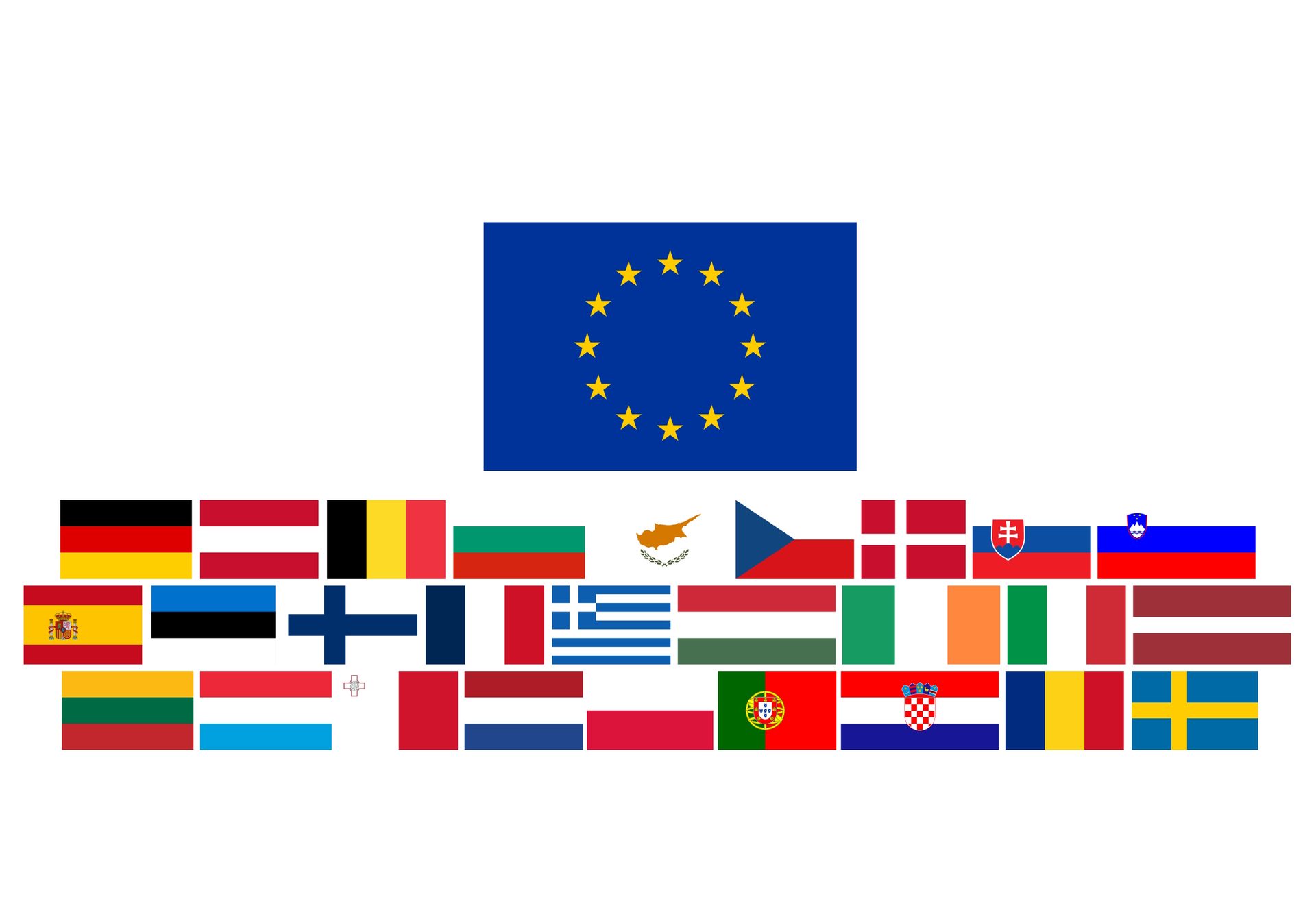
"The EU forced Apple to allow sideloading" gets repeated so often that it's worth being precise about what actually happened, because the real sequence is more specific and more interesting than that one-line summary suggests. A law took effect, a regulator designated specific companies as subject to it, those companies built something that technically satisfies the law's text while trying to preserve as much of their existing control as legally possible, and a court just spent over a year deciding whether that technical compliance was good enough. As of July 2026, the answer for Apple, on the core question, was no.
What a "Gatekeeper" Actually Means
The Digital Markets Act (DMA) is EU legislation that took effect in 2022 and became fully applicable to designated companies in 2024. Its mechanism is narrower and more targeted than a general tech-regulation law — rather than regulating every company in a given industry, it creates a specific legal category, "gatekeeper," reserved for a small number of "core platform services" the European Commission determines have an entrenched, durable position acting as an important gateway between businesses and consumers. On 6 September 2023, the Commission formally designated Apple and Alphabet (Google's parent company) as gatekeepers for their respective app stores — Apple's App Store and Google's Play Store — alongside several other platforms these and other companies operate. That designation carried a six-month compliance clock: gatekeepers had until March 6, 2024 to bring their designated services in line with the DMA's specific obligations.
The Specific Obligation at Issue
Among the DMA's list of requirements, Article 6(4) is the one directly responsible for the sideloading conversation. It obligates a gatekeeper to allow, and to technically enable, the installation and effective use of third-party software applications or app stores through means other than its own core platform service — plus the ability to actually access those alternative stores or apps from outside the gatekeeper's own platform. In plain terms: Apple and Google can't simply be the only legal channel through which software reaches a user's device. The same article separately obliges gatekeepers to allow the removal of pre-installed apps and the changing of default settings, extending the "you don't get to be the only option" logic beyond app distribution into how a device is configured out of the box.
Alternative Marketplaces Are Not the Same Thing as Sideloading
It's worth being precise about a distinction that gets flattened in most casual coverage of this topic. Classic "sideloading," in the sense long available on Android, means a user can install an app file directly, with no store or centralized review process involved at all. What Apple actually built for the EU in response to the DMA is a different, more controlled mechanism: alternative app marketplaces. Since iOS 17.4, EU-based developers can operate their own marketplace apps — real ones already launched by the time of writing include AltStore PAL and the Epic Games Store's EU version — through which users can download other apps, but every single app distributed this way, regardless of which marketplace sells it, still has to pass through Apple's own notarization process first: an Apple-run review combining automated scanning and limited human review, checking for malware and baseline functionality, before Apple will let the app run on an iPhone at all. This is a meaningfully different arrangement from Android's version of sideloading, where a user can install an unreviewed APK file directly with no platform-operator review step at all. Apple's version keeps a checkpoint the company controls in the middle of every distribution path, even the ones that aren't its own App Store.
The Fee Structure Fight, and Its August 2026 Rewrite
The financial terms Apple attached to this new distribution path became almost as contentious as the technical mechanism itself. Apple's original EU compliance plan introduced a Core Technology Fee — €0.50 charged per first annual app install beyond a one-million-install threshold, applied regardless of whether that install came through the App Store or an alternative marketplace. Developers and regulators argued this effectively neutralized the incentive to use an alternative marketplace at all, since a popular free app distributed outside Apple's own store could still rack up a large per-install bill with no revenue attached to offset it. On August 18, 2026, Apple announced it was scrapping the Core Technology Fee entirely, replacing it with a flat 5% "Core Technology Commission" charged specifically on digital goods actually sold through apps distributed outside the App Store — a structural shift from charging for installation regardless of revenue to charging a percentage only when money actually changes hands. Apple's own notarization requirement, notably, wasn't part of what changed in this fee overhaul — every app in the EU, on any marketplace, still has to clear that Apple-run review.
Apple's Legal Challenge, and Why It Failed
Apple didn't simply comply with its gatekeeper designation and the specific obligations that came with it — it formally challenged the underlying decisions before the EU's General Court in Luxembourg, disputing both its gatekeeper status itself and specific Commission findings tied to it, including a claim that the DMA's interoperability requirements violated Apple's fundamental rights, and a separate challenge involving iMessage. On July 8, 2026, the General Court dismissed Apple's challenges across the board. The judges found the Commission had acted within its authority in treating Apple's various App Store implementations across iPhone, iPad, Mac, Apple TV, and Apple Watch as a single core platform service, rejected the fundamental-rights argument against the interoperability rules, and declined to even hear the iMessage-specific claim on admissibility grounds. Apple retains a further right of appeal to the Court of Justice of the European Union, the bloc's highest court, on points of law — meaning this specific fight, while a clear and substantial loss for Apple at this stage, is not yet fully and finally over.
This Was Never Apple's Only DMA Exposure
The sideloading and alternative-marketplace fight, prominent as it's been, is only one strand of Apple's broader DMA compliance record, and it's worth knowing the company's exposure hasn't been limited to a single dispute. On April 23, 2025, the European Commission separately found Apple non-compliant with the DMA over its "anti-steering" rules — restrictions that limited how app developers could tell their own customers about cheaper ways to pay outside the App Store — and fined Apple €500 million over it, with Meta separately fined €200 million the same day over its own DMA violation involving its "pay or consent" advertising model. Under the DMA's penalty structure, a company found non-compliant can face fines up to 10% of its total worldwide annual turnover for a first violation, rising to 20% for a repeat offense within eight years — figures large enough, calculated against a company the size of Apple's total global revenue rather than just its EU App Store revenue, to function as genuine deterrents rather than a routine cost of doing business.
What This Actually Changes for an Ordinary User
Stepping back from the legal mechanics, it's worth being direct about what an EU-based iPhone user can and can't actually do differently as a result of all this, since "the EU forced Apple to open up the App Store" tends to overstate how open the result actually is. A user in the EU can now install apps from a marketplace other than Apple's own — a real, structural change from how iOS worked everywhere in the world before March 2024. What they still can't do is install an app that hasn't passed through Apple's own notarization review, from any source, EU-sanctioned marketplace included — the checkpoint moved, and its owner remains the same. Whether the Court of Justice eventually narrows that specific arrangement further, on a future appeal, is the open question the DMA's sideloading fight has actually been about all along — not whether Apple has to allow other doors into an iPhone, which the General Court has now confirmed it does, but how much control Apple gets to keep over what's allowed to walk through them.

Written by Ravindra Valand
Founder and researcher at AnuSutra. Tracing ancient Sanskrit scriptures (Vedas, Upanishads, Bhagavad Gita) directly from canonical Sanskrit manuscripts, exploring the nexus between contemplative spiritual practices and modern cognitive science.