
The Maha Mrityunjaya Mantra: The Rigveda's Great Death-Conquering Hymn Explained Word by Word
Found in the seventh mandala of the Rigveda, the Maha Mrityunjaya Mantra is one of Hinduism's most revered invocations. A word-by-word textual exploration reveals that its prayer is not a desperate plea to escape physical death, but an ancient metaphor for natural, fearless spiritual liberation.
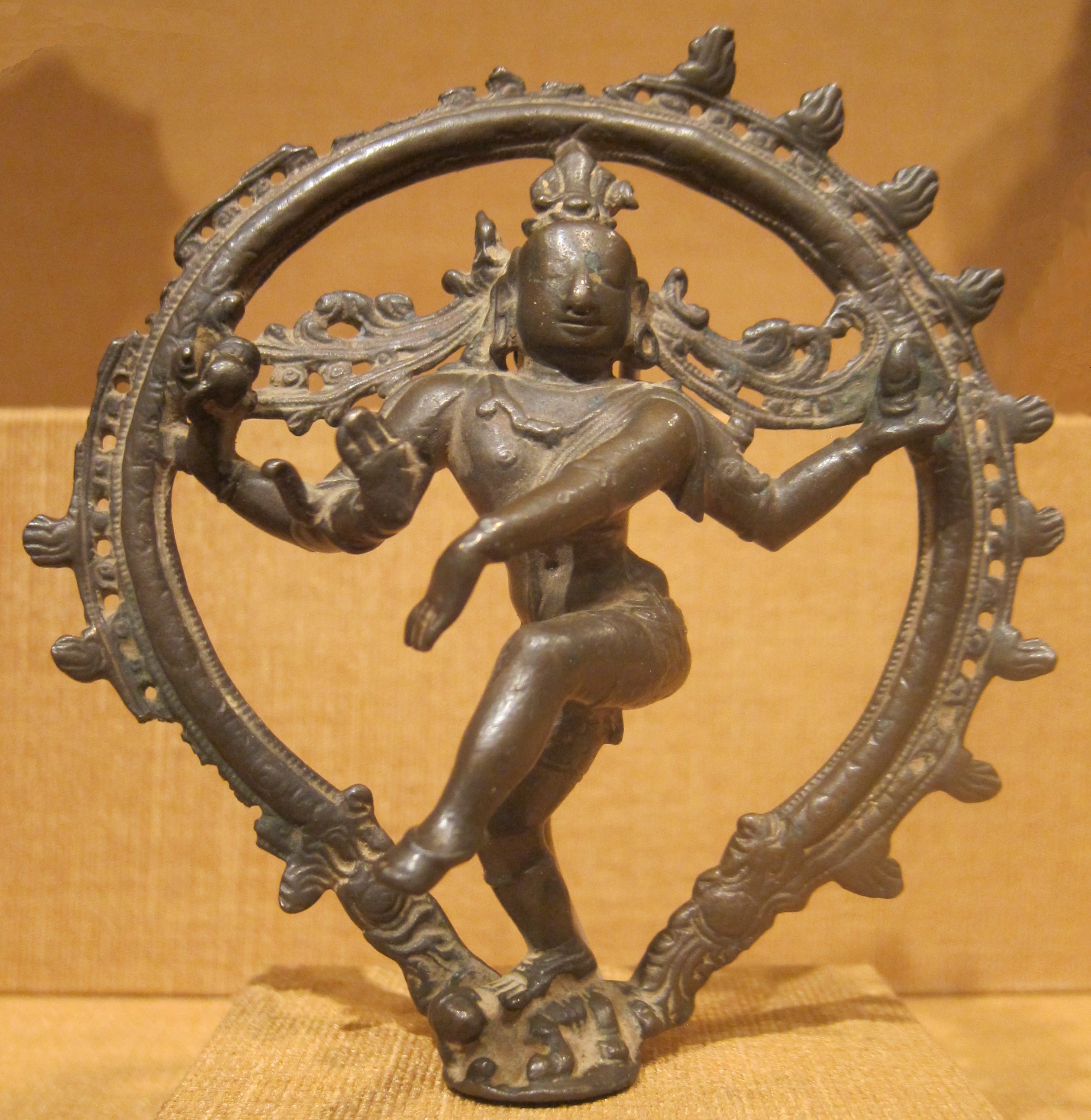
Along with the sacred Gayatri Mantra, no single verse in the vast corpus of Indian scripture has been chanted with greater reverence, frequency, and emotional intensity than the Maha Mrityunjaya Mantra. Popularly known as the "Great Death-Conquering Mantra," it is traditionally chanted during times of serious illness, grave danger, existential crisis, and inner transformation.
Yet in modern popular culture, the verse is frequently reduced to a magical talisman or superstitious protective spell meant to bargain for physical longevity.
When examined within its original ancient textual context, the mantra reveals something infinitely more profound: a psychological and spiritual invocation of supreme maturity. It does not ask for physical immortality in a decaying body. Instead, it employs one of the gentlest, most organic botanical metaphors in world literature to illustrate how a human being can ripen in wisdom, release the fear of death, and awaken to the deathless truth of pure consciousness.
The Scriptural Origin: Rigveda Mandala 7
The Maha Mrityunjaya Mantra originates in the Rigveda, the oldest scripture of the Vedic tradition. It appears in the seventh Mandala (Mandala 7, Sukta 59, Verse 12), a collection of sacred hymns traditionally attributed to the revered sage Maharishi Vasishtha.
Because of its extraordinary spiritual weight, the identical verse was later incorporated into the liturgical traditions of other Vedas:
- In the Taittiriya Samhita of the Krishna Yajurveda (1.8.6.i)
- In the Vajasaneyi Samhita of the Shukla Yajurveda (3.60)
In these ritual contexts, the mantra is addressed to Rudra, the fierce, purifying manifestation of the Divine who dissolves illness, ignorance, and cosmic stagnation — a deity whose compassionate, auspicious aspect would later be revered across the tradition as Shiva.
The complete verse, in its traditional Sanskrit formulation, reads:
ॐ त्र्यम्बकं यजामहे सुगन्धिं पुष्टिवर्धनम्।
उर्वारुकमिव बन्धनान्मृत्योर्मुक्षीय मामृतात्॥
(Om Tryambakam Yajāmahe Sugandhim Pushti-Vardhanam
Urvārukam-Iva Bandhanān Mrityor Mukshīya Mā'mritāt)
Word-by-Word Etymological Deconstruction
To grasp the depth of this ancient hymn, one must unpack each Sanskrit word individually. Unlike modern translations that often compress the verse into a single generic prayer, the original grammar is precise and architectural:
1. Tryambakam (त्र्यम्बकम्)
Tri (three) + Ambaka (eyes, or mothers/dimensions).
The invocation addresses the Divine as "The Three-Eyed One." In Vedic symbolism, the third eye represents the eye of transcendent wisdom (Jnana Chakshu) that sees beyond the duality of the two physical eyes. While the two eyes perceive the dualities of light and dark, pleasure and pain, birth and death, the third eye sees the unified, undivided ground of all reality. In cosmic terms, it also denotes the Lord of the three realms: earth (Bhur), atmosphere (Bhuvar), and heaven (Svar).
2. Yajamahe (यजामहे)
"We revere, we honor, we worship, we contemplate."
The verb is in the present tense, middle voice (Atmanepada), indicating an action whose spiritual benefit flows directly inward to the contemplative practitioner rather than outward as a transaction.
3. Sugandhim (सुगन्धिम्)
Su (fragrant, noble, sweet) + Gandha (scent, fragrance).
"The One who is fragrant." In Vedic thought, fragrance is the subtle, invisible essence of virtue and vitality. Just as the fragrance of a blossom spreads through the air without physical movement, the presence of an enlightened being or the Divine presence permeates all created forms with subtle, uplifting purity.
4. Pushti-Vardhanam (पुष्टिवर्धनम्)
Pushti (nourishment, wholeness, physical and spiritual vitality) + Vardhanam (the one who increases, expands, and fosters).
"The nourisher and fosterer of growth." This recognizes the Divine not as an aloof judge, but as the active life-giving force that sustains the body, nourishes the intellect, and fosters spiritual maturation from within.
5. Urvarukam (उर्वारुकम्)
"The cucumber" or "the muskmelon."
This is the core word around which the entire philosophical realization of the mantra pivots.
6. Iva (इव)
"Just as," "in the same manner as."
7. Bandhanat (बन्धनात्)
Bandhana (stem, stalk, attachment, or bondage).
From the fifth ablative case in Sanskrit grammar, meaning "from the bond of the stem."
8. Mrityoh (मृत्योः)
"From death, from the cycle of mortality."
9. Mukshiya (मुक्षीय)
A prayerful optative verb form: "May I be liberated, may I be released, may I be set free."
10. Ma Amritat (मा अमृतात्)
Ma (not) + Amritat (from immortality / the nectar of truth).
"Not from immortality."
Putting the words together in their natural sequence:
"We revere the Three-Eyed One, fragrant with virtue, who nourishes and sustains all life. Just as a ripe cucumber detaches effortlessly from its vine, may we be liberated from the bondage of death, but never severed from immortality."
The Cucumber Metaphor: The Wisdom of Natural Detachment
Why did the ancient Vedic sage choose a humble cucumber (urvaruka) to illustrate the highest spiritual liberation, rather than an apple, an oak leaf, or a mighty tree?
Consider how different fruits behave:
- When an apple or a mango ripens high up in a tree, it hangs until gravity violently tears it from the branch, dropping it to the earth where it bruises or shatters.
- If a person attempts to pluck an unripe fruit from a stem, they must twist, pull, and tear the bark, leaving a painful wound on both the plant and the fruit.
A cucumber grows differently. It rests on the ground, cradled by the soil. As it grows, it drinks water and sunlight through the stem, swelling with nourishment. But when it reaches full, sweet maturity, something miraculous occurs in its botanical chemistry: the moisture in the connecting stalk simply recedes. The stem naturally dries up and withers. Without any violent wrenching, without any external tugging, the cucumber simply separates from the vine of its own accord. It rests on the ground whole, mature, and complete.
This is the Vedic ideal of dying, both physically and psychologically:
- Spiritual Ripening: The mantra does not advocate running away from life or denying the world. A fruit must stay connected to the vine while it is growing; to sever it early is to destroy it. We must live our duties, engage our relationships, and nourish our faculties.
- Effortless Release: When a human being has lived deeply, cultivated wisdom, and resolved their inner desires, attachment to the temporary physical vehicle falls away naturally. Death is no longer a violent, terrifying severance; it is an effortless detachment born of complete inner maturity.
Conquering Death: The Real Meaning of Mrityu
In Vedic philosophy, physical biological death is merely a punctuation mark in a much larger sentence. The real "death" that terrifies human beings is threefold:
- The Fear of Annihilation: The terror that when the body ceases, awareness vanishes entirely.
- The Living Death of Ignorance (Avidya): The psychological fragmentation that occurs when we mistake our finite ego, our changing thoughts, and our fragile physical frame for our true identity.
- The Bondage to Time: The relentless anxiety of watching youth, health, and loved ones slip away in the river of change.
When the mantra prays Mrityor Mukshiya ("release me from death"), it does not demand that this mortal frame live for ten thousand years. The body, being an assembly of elements, must inevitably dissolve back into the earth, water, fire, air, and space from which it was borrowed.
The prayer is to be liberated from the illusion of mortality — to realize the Amrita, the deathless, uncreated consciousness that was never born and therefore can never die.
In the words of the Brihadaranyaka Upanishad:
Asato Ma Sadgamaya, Tamaso Ma Jyotirgamaya, Mrityor Ma Amritam Gamaya.
"Lead me from the unreal to the real, from darkness to light, from death to immortality."
How the Mantra Transforms the Mind
When chanted with full understanding of its literal Sanskrit architecture, the Maha Mrityunjaya Mantra works as a powerful cognitive and emotional recalibration:
- It Dissolves Existential Anxiety: By aligning awareness with the Three-Eyed One, it lifts the practitioner out of narrow survival panic into the expansive perspective of cosmic order (Rita).
- It Reframes Aging and Illness: Chronic illness or the natural aging of the body ceases to be viewed as an unnatural catastrophe; it is recognized as the vine completing its natural cycle.
- It Cultivates Fearlessness (Abhaya): True fearlessness does not come from believing you will never be hurt; it comes from knowing that the deepest reality within you cannot be touched by fire, water, wind, or time.
The Maha Mrityunjaya Mantra remains immortal because it does not lie to us about mortality. It honors the body's need for nourishment (Pushti), respects the seasons of life, and shows us that when wisdom is fully ripe, freedom requires no force at all — only the quiet, majestic surrender of the ripe fruit resting in the hands of the eternal.
Discover Your Dominant Guna Constitution
Evaluate your balance of Sattva, Rajas, and Tamas according to Chapter 14 of the Bhagavad Gita with our self-inquiry quiz.

Written by Ravindra Valand
Founder and researcher at AnuSutra. Tracing ancient Sanskrit scriptures (Vedas, Upanishads, Bhagavad Gita) directly from canonical Sanskrit manuscripts, exploring the nexus between contemplative spiritual practices and modern cognitive science.
Related Sacred Studies

The Four Vedas Explained: What's Actually Inside Hinduism's Oldest Scriptures
Most people who say "the Vedas" couldn't name what's actually in them. Here's what's genuinely inside each of the four — the Rigveda's hymns, the Yajurveda's ritual manuals, the Samaveda's melodies, and the Atharvaveda's spells for daily life.

The Gayatri Mantra: Its Actual Source in the Rigveda and What It Means
Before it became one of the most widely recited verses in the world, the Gayatri Mantra was a single, specific hymn to the sun, composed by a named sage, in one of the Rigveda's oldest sections.
The Purusha Sukta: The Rigveda's Hymn of the Cosmic Being
Sixteen verses in the Rigveda's tenth book describe a single cosmic being sacrificed by the gods, with everything that exists — the sky, the sun, the Vedas, even the social order — emerging from the pieces. Scholars generally agree it's one of the youngest hymns in the whole collection.