
The Prashna Upanishad: Six Questions on the Nature of Being
Six students go to one teacher with six different questions, from where living beings come from to what happens to a person at death. The Prashna Upanishad's structure is unusually orderly for a text this old — each answer builds on the last.
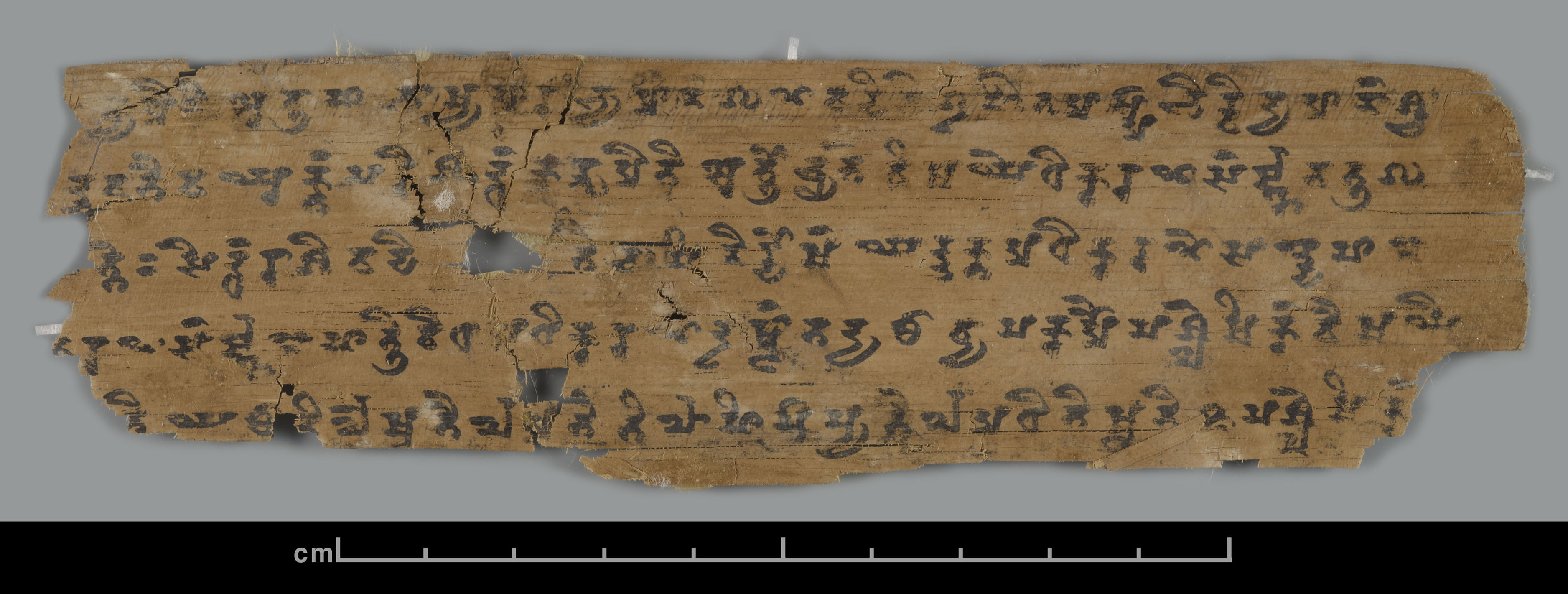
The Prashna Upanishad, embedded in the Atharvaveda and ranked fourth in the traditional Muktika list of 108 Upanishads, has one of the more straightforward organizing structures in the entire genre — which is itself worth noting, since most classical Upanishads move associatively between dialogue, story, and doctrine without much concern for tidy sequencing. The Prashna instead does exactly what its name promises: six students approach a single teacher, the sage Pippalada, each asks one question, and each of the text's six chapters is built around answering that one question in full before moving to the next.
Six Students, Six Questions, in Deliberate Order
The six students — named in the text as Kabandhin Katyayana, Bhargava Vaidarbhi, Kausalya Ashvalayana, Sauryayanin Gargya, Shaibya Satyakama, and Sukesan Bharadvaja — pose questions that move in a deliberate arc from the largest possible scale down to the most personal. The first question, from Kabandhin, asks where created beings actually come from. The questions that follow narrow progressively: how many gods (in the sense of vital powers) support and illuminate an embodied being, and which among them is greatest; what prana, the vital breath, actually is and how it apportions itself through the body; the nature and mechanics of deep, dreamless sleep and dreaming; the meaning and power of the syllable Om, meditated on until the moment of death; and finally, in the sixth and final chapter, the nature of the sixteen-part being (the purusha) described in a hymn from the Atharvaveda, and where those sixteen parts go, or don't go, when a person dies.
This overall movement — creation and cosmology first, physiology and psychology in the middle, meditation practice and the moment of death last — gives the Prashna a genuinely coherent structure that later readers have found easier to follow straight through than most other Upanishads of comparable philosophical density.
Prana as the Text's Central Concern
Prana receives more sustained, systematic attention in the Prashna than in almost any other classical Upanishad. The second and third chapters, answering Bhargava's and Kausalya's questions respectively, describe prana not simply as breath in the ordinary physical sense but as the underlying vital force that supports and enables every other bodily function and every other sense faculty — speech, sight, hearing, mind, and the rest are described as each individually claiming, in a passage echoing the same competitive-boasting structure found in the Kena Upanishad's story of the gods, to be the most important support of the body, only to discover, once prana temporarily withdraws in a kind of thought experiment the text stages, that none of them can function at all without it. Prana is then further divided into five distinct functional currents moving through the body — prana, apana, samana, udana, and vyana — each assigned a specific bodily role, a level of physiological detail that later Yoga Upanishads and hatha yoga traditions would build on extensively.
Deep Sleep, Dreaming, and What Doesn't Sleep
The fourth chapter's treatment of sleep states, answering Sauryayanin's question, gives the Prashna a genuinely distinctive contribution to Upanishadic psychology, one that closely parallels (and may share common roots with) the more famous four-states analysis in the Mandukya Upanishad. In dreaming sleep, the text explains, the mind, having gathered up impressions from waking experience, constructs its own world out of those remembered fragments — seeing again what has been seen, hearing again what has been heard. In deep, dreamless sleep, by contrast, the mind is described as being drawn back into the highest reality, resting without perceiving anything external or internal at all — a state the text treats not as blank unconsciousness in the ordinary negative sense, but as a temporary, unwitting return to a kind of underlying wholeness, from which the mind then re-emerges each morning to resume its ordinary waking activity.
What Happens at Om, and What Happens at Death
The fifth chapter, answering Shaibya's question about the syllable Om, distinguishes between different depths of meditation on the same syllable, correlated with different outcomes after death — meditation on Om's first sound alone (the letter A) leading to a swift return to human birth, meditation extended through its second sound (U) leading to attainment of a subtler, more refined realm, and meditation carried through into the full, complete syllable understood as a unity leading, per the text, all the way to the highest reality itself, described here as identical with the sun. It's a structure that treats depth of understanding and quality of practice, rather than the mere act of chanting, as what actually determines the outcome — chanting the syllable correctly but only partially understanding it produces one result, while grasping it completely produces something considerably further-reaching.
The sixth and final chapter, answering Sukesan's question about the sixteen-part being, closes the text with an image of dissolution and return: at death, the various parts making up a person — prana, faith, space, air, fire, water, earth, the senses, mind, food, strength, and the rest — are described as merging back into their respective cosmic sources, the way rivers, moving toward the ocean, disappear into it, losing their individual names and forms, yet in some sense persisting as the ocean itself. What remains after this dissolution, the text argues, is the purusha stripped of these sixteen parts — imperishable, the text says, because it was never actually identical with any of the parts that dissolve away at death in the first place.
An Unusually Systematic Text
What makes the Prashna Upanishad worth reading as a complete text rather than mined for isolated quotations, the way many shorter Upanishads tend to be treated, is precisely this deliberate, cumulative structure — six increasingly specific questions, answered in a sequence that builds a fairly complete picture, moving from where beings come from, through how they function while alive, to what becomes of them when they die, with each chapter's answer setting up the terms the next chapter needs to build on.
Discover Your Dominant Guna Constitution
Evaluate your balance of Sattva, Rajas, and Tamas according to Chapter 14 of the Bhagavad Gita with our self-inquiry quiz.

Written by Ravindra Valand
Founder and researcher at AnuSutra. Tracing ancient Sanskrit scriptures (Vedas, Upanishads, Bhagavad Gita) directly from canonical Sanskrit manuscripts, exploring the nexus between contemplative spiritual practices and modern cognitive science.
Related Sacred Studies
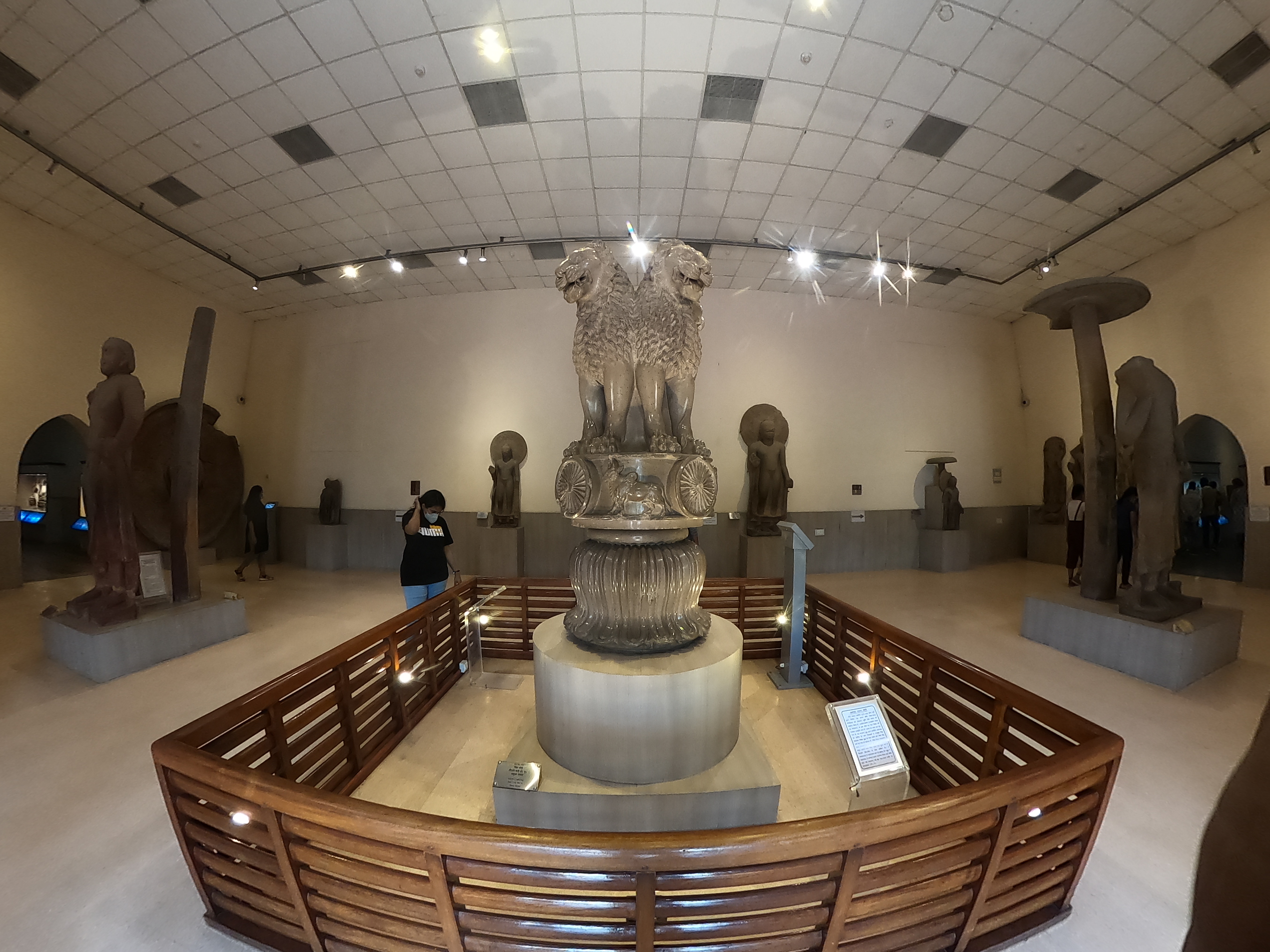
The Mundaka Upanishad: Satyameva Jayate and the Parable of the Two Birds
India's national motto comes from a three-part Upanishad attached to the Atharvaveda — and the line right before it, about two birds on the same branch, is arguably the more important teaching.
The Four Mahavakyas: The Upanishads' Great Sayings, Explained Together
Four short sentences, one drawn from each of the four Vedas, are traditionally treated as the compressed summary of everything the Upanishads are trying to say. Read separately they sound like four different claims. Read together, they're one.

The Four Vedas Explained: What's Actually Inside Hinduism's Oldest Scriptures
Most people who say "the Vedas" couldn't name what's actually in them. Here's what's genuinely inside each of the four — the Rigveda's hymns, the Yajurveda's ritual manuals, the Samaveda's melodies, and the Atharvaveda's spells for daily life.