
The Gita's Chapter 15: Purushottama Yoga and the Cosmic Banyan Tree
Chapter 15 opens with an upside-down tree, roots in the air and branches reaching down into the world, and asks the reader to do something unusual with it: cut it down.
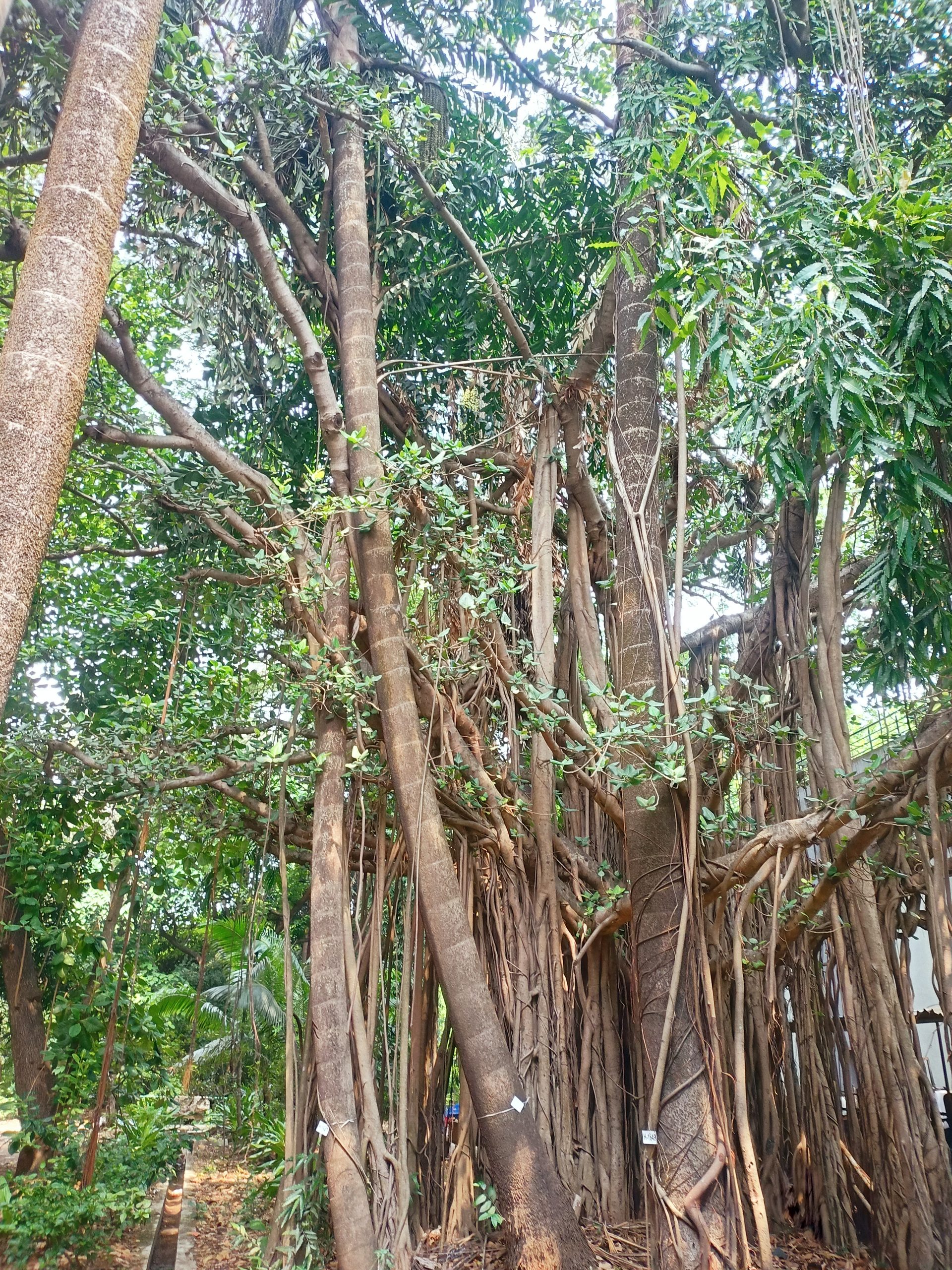
Chapter 15 of the Bhagavad Gita, titled Purushottama Yoga — the yoga of the supreme person — opens with one of the text's more visually striking and philosophically dense images: an eternal ashvattha tree, roots reaching upward and branches spreading downward, whose leaves are the hymns of the Vedas. The instruction that follows this description, a few verses later, is unusual for how it treats the image: rather than being told to admire or understand the tree, the practitioner is told to cut it down.
A Tree Growing the Wrong Way, on Purpose
The upside-down orientation is the whole point of the metaphor. An ordinary tree draws its life from roots buried in the ground, reaching toward a sky it will never touch. The Gita's ashvattha tree inverts this deliberately: its roots are described as being above, rooted in something beyond the material world entirely — commentators generally read this as the tree's ultimate source being Brahman or the unmanifest, positioned above and prior to material creation — while its branches extend downward into the world of ordinary human experience, nourished, per verse 15.2, by the three gunas (the qualities of nature the Gita discusses at length in chapters 14 and 17: sattva, rajas, and tamas), with sense-objects as their sprouting buds and secondary roots stretching downward into the human world, giving rise to further action and its consequences.
The name ashvattha itself carries a secondary meaning worth noting: it can be read as "that which will not stand until tomorrow" — a reference to the fig tree species' documented growth pattern of continuously extending new roots and branches while the exact shape of yesterday's tree effectively no longer exists, and traditionally read here as a comment on the fundamentally transient nature of the entire cosmic structure the tree represents, however permanent and rooted it might appear to someone standing underneath it.
The Instruction to Cut, With the Right Tool
Verse 15.3 makes the chapter's central instruction explicit: this tree, in its true form, cannot actually be perceived in the ordinary way — its beginning, end, or foundation cannot be grasped by looking at it as it appears. The practitioner is told to cut down this deeply rooted ashvattha with the strong axe of detachment (asanga-shastrena drdhena). Having cut it down, verse 15.4 continues, one should then seek out that original place from which, once reached, there is no returning — taking refuge in the same primal source from which this ancient, extended activity first proceeded.
The metaphor's logic is worth spelling out because it's easy to misread as advocating withdrawal from the world in some literal sense. What's being cut isn't the world itself, and the Gita elsewhere — most explicitly in chapters 2 through 4 — explicitly rejects mere physical withdrawal from action as an adequate spiritual strategy on its own. What's being cut, per the specific tool named, is attachment: the entangling grip that mistakes the branches (ordinary experience, sense-objects, the consequences of action) for the whole of reality, rather than recognizing them as extensions from a root system that reaches somewhere else entirely.
Three Purushas, Not One
The chapter's second half introduces a distinction that becomes one of its more philosophically important contributions: three categories of purusha, or "person" / conscious being, rather than the simpler two-part division (self and not-self, or individual soul and supreme soul) that appears more commonly elsewhere in the text. Verses 15.16 through 15.18 name kshara purusha, the perishable, identified with all beings in their changing, embodied condition; akshara purusha, the imperishable, identified with the unchanging witness-consciousness standing apart from that change; and then, above both, purushottama — the supreme person, described as different from and superior to both the perishable and the imperishable, the one who, having entered the three worlds, sustains and supports them as their imperishable lord.
This third category matters because it resolves a tension that could otherwise look like the text contradicting itself across different chapters — sometimes emphasizing an unchanging witness-self as the ultimate reality (closer to akshara), sometimes emphasizing Krishna's own active, personal, world-sustaining presence (which doesn't sit comfortably as merely a passive, unchanging witness). Purushottama is offered as the reality that includes and exceeds both categories at once: neither merely the changing world of embodied experience nor merely a detached, unmoving witness of it, but the reality underlying and superior to that entire distinction.
Why Krishna Himself Is Named Purushottama
The chapter closes, at verses 15.18 and 15.19, with Krishna identifying himself directly with this third, supreme category — stating that because he transcends the perishable and is higher even than the imperishable, he is celebrated in both ordinary human discourse and the Vedas themselves as Purushottama, the supreme person. Whoever, undeluded, knows him this way, the text continues, knows everything there is to know, and worships him with their whole being.
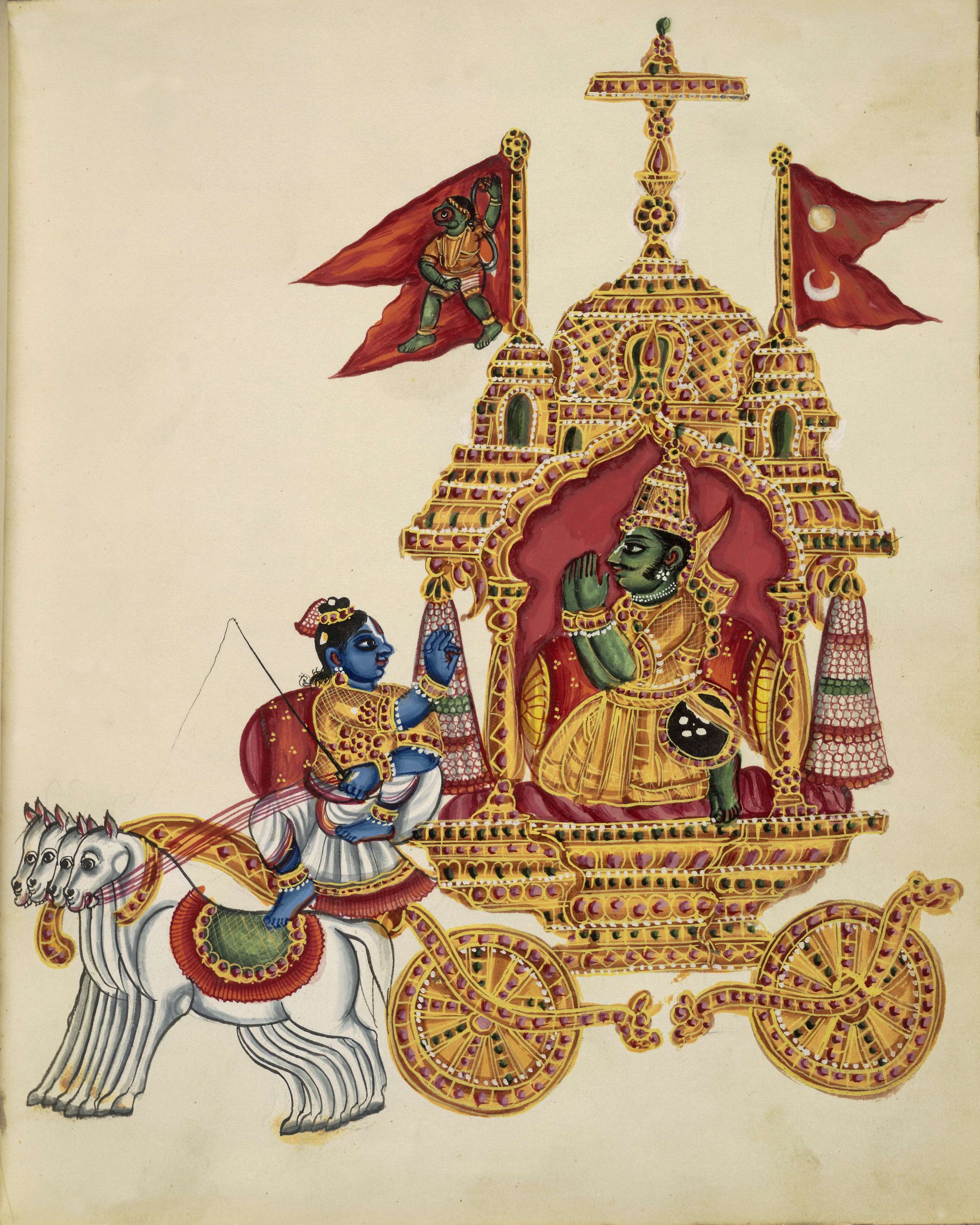
This closing identification is what gives chapter 15 its title, and it's what turns the tree metaphor from a piece of standalone cosmology into a specifically devotional teaching. The tree, cut down through detachment, isn't simply left behind in favor of some impersonal, abstract absolute. The place it leads back to — the root above the roots, the source the practitioner is told to seek refuge in once the tree of entangled attachment has been severed — is identified, by the chapter's own final verses, with Krishna specifically, described here in his most philosophically elevated register: not merely a charioteer offering counsel on a battlefield, but the very ground the entire inverted, ever-growing tree of the world was rooted in from the beginning.
Discover Your Dominant Guna Constitution
Evaluate your balance of Sattva, Rajas, and Tamas according to Chapter 14 of the Bhagavad Gita with our self-inquiry quiz.

Written by Ravindra Valand
Founder and researcher at AnuSutra. Tracing ancient Sanskrit scriptures (Vedas, Upanishads, Bhagavad Gita) directly from canonical Sanskrit manuscripts, exploring the nexus between contemplative spiritual practices and modern cognitive science.
Related Sacred Studies
The Gita's Chapter 12: Bhakti Yoga and the Path of Devotion
Arjuna asks Krishna a direct question — is it better to worship a personal god or meditate on the formless absolute? — and the Bhagavad Gita's shortest chapter gives an answer that's more qualified than either side of that debate usually expects.
The Gita's Chapter 16: The Divine and the Demoniac Natures
Chapter 16 lists more than two dozen qualities that define two opposite kinds of people — and then makes a claim that's easy to miss: everyone is born with one nature or the other already leaning in a particular direction.
The Gita's Final Teaching: Moksha and Renunciation in Chapter 18
Seventeen chapters of teaching come down to one closing move: Krishna hands Arjuna everything he's said, tells him to think it over completely, and then leaves the actual decision entirely in Arjuna's hands.