
The Gita's Final Teaching: Moksha and Renunciation in Chapter 18
Seventeen chapters of teaching come down to one closing move: Krishna hands Arjuna everything he's said, tells him to think it over completely, and then leaves the actual decision entirely in Arjuna's hands.
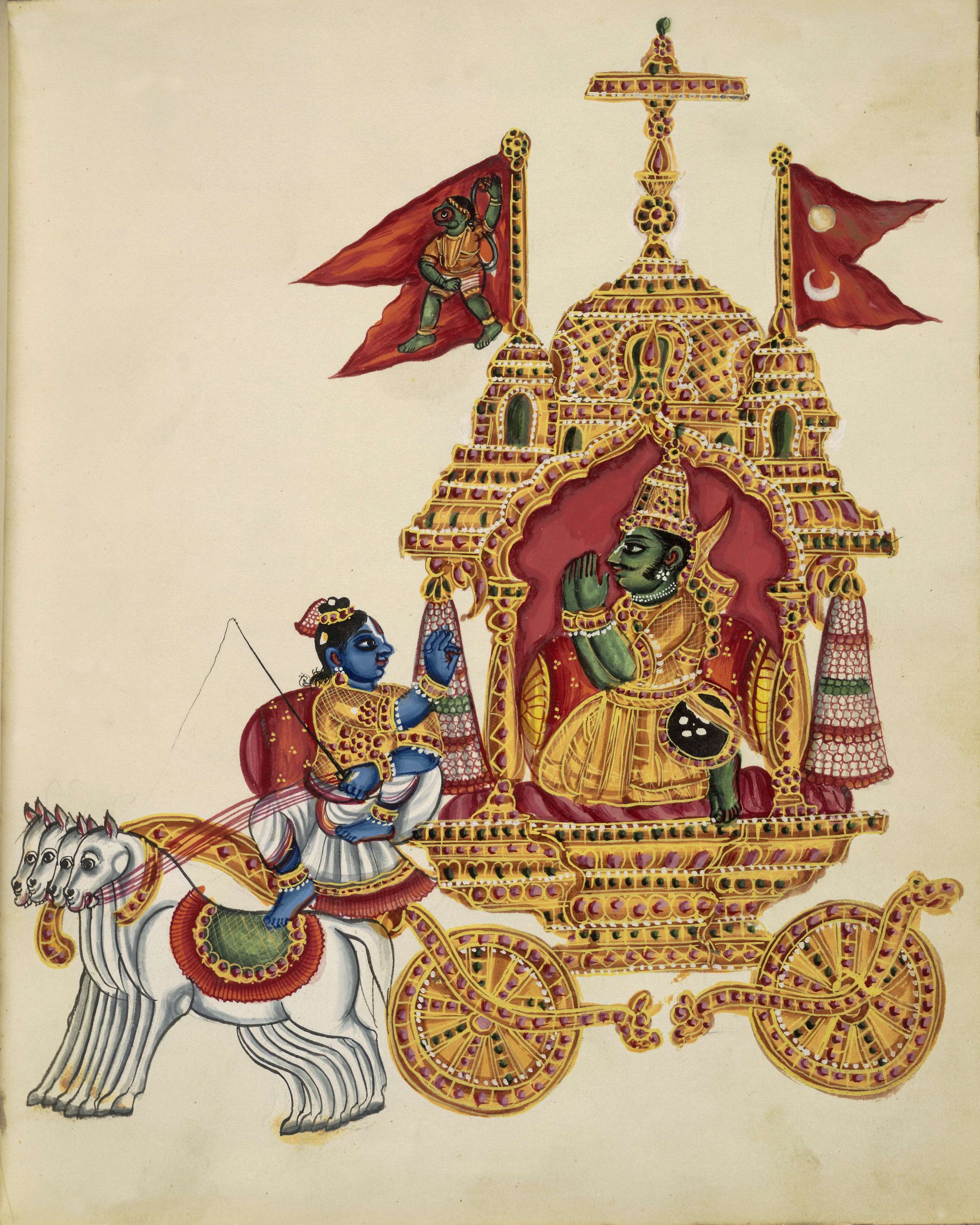
Eighteen chapters after Arjuna first dropped his bow and refused to fight, the Bhagavad Gita's final chapter faces a genuinely difficult problem of its own: how do you end a teaching this long, this varied, without either repeating everything already said or leaving the listener without a clear place to land? Chapter 18 — Moksha Sannyasa Yoga, "the yoga of liberation through renunciation" — solves this by doing something bolder than a simple summary. It revisits the text's central tension one final time, resolves it with more precision than anywhere earlier in the text, and then does something the Gita hasn't done up to this point: it stops instructing and asks Arjuna to decide for himself.
Two Words That Look Like Synonyms and Aren't
The chapter opens with Arjuna asking Krishna to explain, distinctly, the true nature of two words that have been used somewhat loosely across the preceding seventeen chapters: sannyasa and tyaga — both commonly translated into English as some version of "renunciation," which is exactly the confusion Arjuna is asking Krishna to clear up. Krishna's answer draws a precise line between them: sannyasa, in the sense some teachers use it, means giving up actions that are driven by personal desire altogether; tyaga specifically means giving up attachment to the fruits, the results, of any action — while continuing to perform the action itself.
This distinction matters because it settles, in a single stroke, a question the Gita has been circling since its second chapter: is the spiritual path about doing less, or about doing the same amount while relating to it differently? Krishna's answer, restated here with unusual directness, comes down firmly on the second option. He states that renouncing obligatory action is never proper, and that giving it up out of delusion is classified as a tamasic, or ignorance-driven, form of renunciation. The path this chapter recommends was never about withdrawal from activity. It's about which part of the activity — the doing, or the craving for a particular outcome from the doing — actually gets released.
Three Kinds of Giving Something Up
Having drawn that line, Krishna spends the chapter's opening section applying the text's recurring three-part framework — the gunas of sattva, rajas, and tamas — specifically to the act of renunciation itself, which is a more granular treatment than the gunas receive anywhere earlier in the text. Giving up a duty out of ignorance, from fear of physical discomfort or because the task feels burdensome, is classified as rajasic renunciation, and Krishna states plainly that such renunciation earns no real spiritual benefit. Abandoning an obligatory action entirely, out of simple confusion about what one's actual duty even is, counts as tamasic. Only performing an action because it ought to be performed, released from attachment to its result and from the craving to avoid it, while the action itself continues fully — that, Krishna says, is the sattvic form, the one that actually constitutes tyaga in the sense worth pursuing.
The same threefold analysis gets extended across the rest of the chapter to knowledge, action, the performer of action, intellect, resolve, and even happiness — each broken into its sattvic, rajasic, and tamasic expression. Sattvic happiness, for instance, is described as something that feels like poison at first and like nectar in the end, arising from the clarity of one's own understanding — a description that pointedly inverts how pleasure ordinarily gets judged, by its immediate feel rather than by what it actually settles into over time. It's a systematic closing exercise: rather than introducing new concepts this late in the text, chapter 18 takes the gunas the Gita has already spent several chapters establishing and runs them, one final time, across essentially every category of human action and experience the text has touched on.
Better Your Own Dharma, Imperfectly Done
Amid this systematic survey, Krishna restates a principle he'd already introduced earlier in the text, in a formulation compact enough that it's become one of the most quoted single lines in the entire Gita: better one's own duty, though imperfectly performed, than the duty of another well performed. The claim isn't a case for mediocrity — it's a claim about fit. A task performed by someone for whom it's genuinely suited, even performed less than perfectly, is being treated as more valuable than the identical task performed with more polish by someone it doesn't actually suit. This lands with particular weight this late in the Gita specifically because Arjuna's entire crisis, eighteen chapters earlier, was exactly a crisis about fit — a warrior facing a war he felt didn't suit the person he wanted to be. The line doesn't resolve that tension by force; it restates the Gita's answer to it one final time, in its most condensed form, right before the text's closing movement.
Knowledge More Secret Than Secrecy Itself
As the chapter approaches its climax, Krishna signals a shift in register with an unusual, almost self-referential line: iti te jnanam akhyatam guhyad guhyataram maya — thus, knowledge more confidential than confidentiality itself has been explained to you by me. He follows this immediately with an instruction that stands out against everything the text has done up to this point: vimrishyaitad ashesena yathecchasi tatha kuru — reflect on this completely, and then act as you wish.
This line is worth sitting with for what it doesn't do. Krishna doesn't issue a final command. After seventeen-plus chapters of sustained philosophical and practical teaching — delivered, notably, to a friend paralyzed with doubt in the middle of an active battlefield, under real time pressure — the text's response to that pressure isn't to close the door on Arjuna's own judgment. It's to hand the whole of what's been taught back to him and make explicit that the decision, when it comes, has to be his. This is a genuinely different rhetorical move than most instructional or scriptural texts make at their conclusion, where authority typically culminates in a directive. The Gita's culminating move is closer to the opposite: maximal teaching, followed by an explicit return of the choice to the one being taught.
Then the Actual Invitation
Only after that return of agency does Krishna offer what many readers take as the Gita's single most concentrated statement, arriving just a few verses later: sarva-dharman parityajya mam ekam sharanam vraja; aham tvam sarva-papebhyo mokshayishyami ma suchah — abandon all varieties of dharma and take refuge in me alone; I will liberate you from all sin; do not grieve. It's worth noticing the order these two statements come in. "Act as you wish" comes first; the invitation to surrender comes after, framed as an offer rather than a precondition for anything Krishna has already given. Whatever a given tradition's theological reading of this specific verse — and there are several, developed at length by different commentators over many centuries — the sequencing itself carries meaning: the text doesn't make its most sweeping offer contingent on compliance already secured. The offer comes to someone who has just been explicitly told the choice is genuinely his to make.

My Delusion Is Destroyed
The chapter, and the Gita's central dialogue, ends with Arjuna finally speaking again at length for the first time since chapter 2 — a structural detail worth noticing on its own, since it means the entire body of the Gita's teaching, from chapter 2 through most of chapter 18, has been delivered essentially without interruption, a single extended discourse rather than a back-and-forth conversation. Arjuna's closing words are direct and specific: nashto mohah smritir labdha tvat-prasadan mayachyuta; sthito 'smi gata-sandehah karishye vachanam tava — my delusion is destroyed, and I have regained my memory (or understanding) through your grace, O Achyuta; I am now firmly resolved, my doubts have gone, and I will act according to your word.
This is the frame story's actual resolution, and it's worth being precise about what kind of resolution it is. Arjuna doesn't say Krishna has given him new information he lacked before. He says his delusion — his moha, the same word the text uses throughout for the specific kind of confused misperception that produces bad decisions — has been destroyed, and that what's returned in its place is memory, recollection, as if the understanding he needed had been available to him all along and simply obscured. The crisis that opened the Gita wasn't, on this account, a gap in Arjuna's knowledge that Krishna needed to fill from scratch. It was a fog that needed clearing, and eighteen chapters of teaching, followed by Arjuna's own reflection on all of it, is what cleared it.
Wherever Krishna and Arjuna Are
The text's true final verse belongs not to Krishna or Arjuna but to Sanjaya, the narrator who has been relaying this entire dialogue to the blind king Dhritarashtra from the very first chapter. Sanjaya closes with a verse traditionally called the Ekasloki Gita — "the Gita in one verse," on the strength of a long-standing claim that reciting this single line carries something of the benefit of the whole text: wherever there is Krishna, the lord of yoga, and wherever there is Arjuna, the wielder of the bow, there will be fortune, victory, prosperity, and sound judgment — this is my belief.
It's a deliberately understated way to close a text this ambitious — not a final teaching from Krishna, not a triumphant declaration from Arjuna, but a quiet observation from the narrator standing outside the conversation entirely, watching two figures who have just finished a conversation about the nature of action, duty, and the self, and noting simply that wherever this particular combination is present — divine counsel paired with a person actually willing to act on it — good outcomes tend to follow. The Gita, across eighteen chapters, never really promised Arjuna the war would be easy, or that fighting it would be free of loss. What it promised, and what this final verse quietly restates, was that facing it with clarity rather than delusion was itself the thing worth achieving — the war's outcome was always going to be what it was; Arjuna's relationship to his own part in it was the only thing the entire dialogue was ever actually about.
Discover Your Dominant Guna Constitution
Evaluate your balance of Sattva, Rajas, and Tamas according to Chapter 14 of the Bhagavad Gita with our self-inquiry quiz.

Written by Ravindra Valand
Founder and researcher at AnuSutra. Tracing ancient Sanskrit scriptures (Vedas, Upanishads, Bhagavad Gita) directly from canonical Sanskrit manuscripts, exploring the nexus between contemplative spiritual practices and modern cognitive science.
Related Sacred Studies
The Gita's Chapter 12: Bhakti Yoga and the Path of Devotion
Arjuna asks Krishna a direct question — is it better to worship a personal god or meditate on the formless absolute? — and the Bhagavad Gita's shortest chapter gives an answer that's more qualified than either side of that debate usually expects.
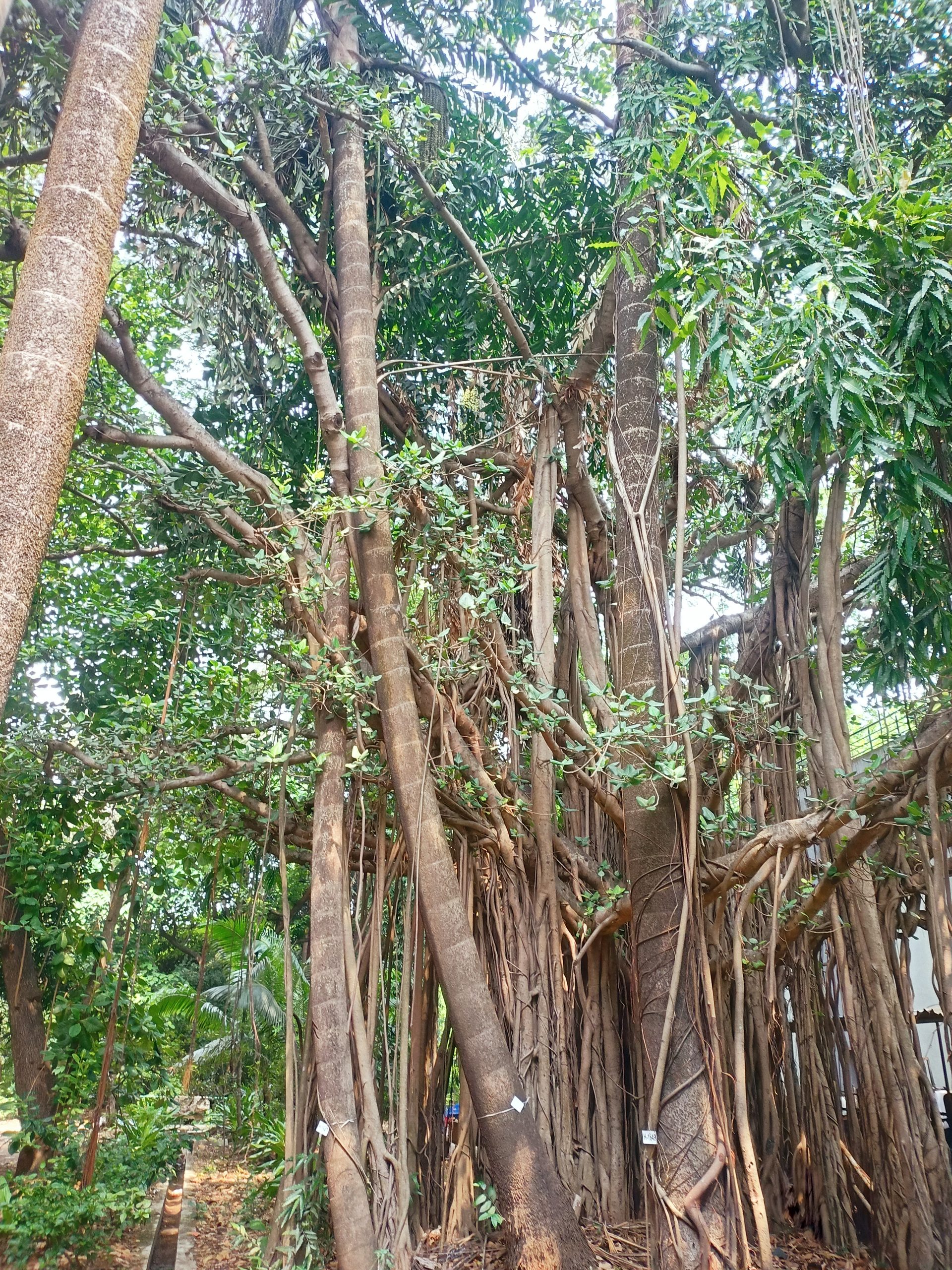
The Gita's Chapter 15: Purushottama Yoga and the Cosmic Banyan Tree
Chapter 15 opens with an upside-down tree, roots in the air and branches reaching down into the world, and asks the reader to do something unusual with it: cut it down.
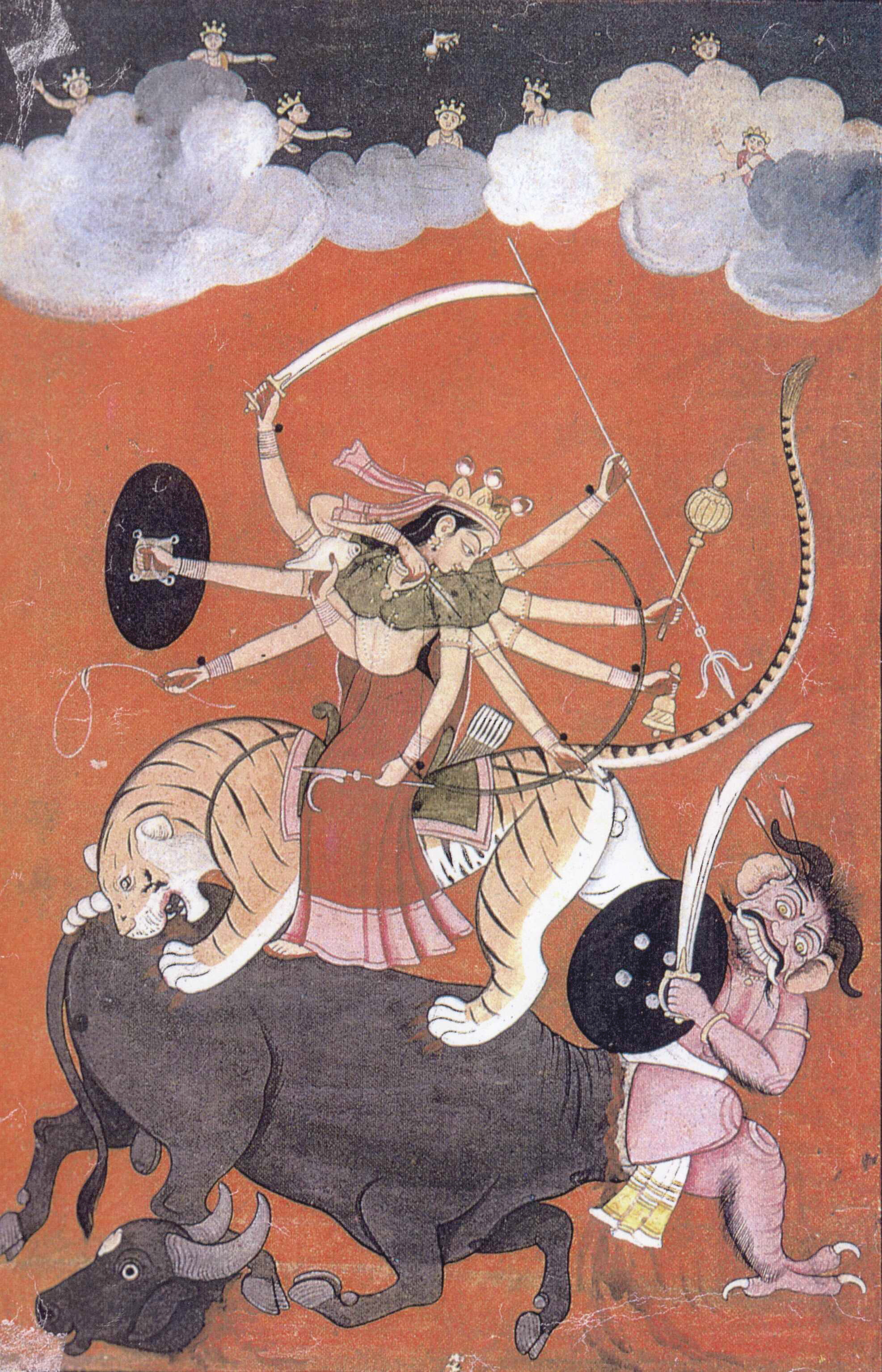
The Gita's Chapter 16: The Divine and the Demoniac Natures
Chapter 16 lists more than two dozen qualities that define two opposite kinds of people — and then makes a claim that's easy to miss: everyone is born with one nature or the other already leaning in a particular direction.