
The Gita's Chapter 4: Krishna's Avatar Declaration and the Yoga of Knowledge in Action
Chapter 4 is where Krishna stops arguing about grief and duty and makes a much larger claim about himself — then spends the rest of the chapter explaining why the claim matters less than what a person does with their own actions.
By the time the Bhagavad Gita's fourth chapter opens, Krishna has already spent two full chapters making a philosophical case for why Arjuna should fight — the soul is imperishable, grief over its embodied comings and goings is grief over the wrong object, and the discipline of "yoga" is really a discipline of acting without craving specific outcomes from the action. Chapter 4 takes a sharp turn: Krishna stops arguing philosophy in the abstract and starts making a claim about his own nature that changes what kind of conversation this actually is.
"Whenever Righteousness Declines"
The chapter's most quoted lines, verses 4.7 and 4.8, open with yada yada hi dharmasya glanir bhavati bharata — whenever there is a decline in dharma and a rise of its opposite, Krishna declares, he manifests himself. The purpose is stated directly in the following verse: to protect the good, destroy those who do harm, and firmly reestablish dharma, he takes birth age after age. This is, in the most literal sense available in the text, an avatar declaration — Krishna stating outright that his presence on the battlefield as Arjuna's charioteer is not incidental but one instance of a recurring pattern, one he claims responsibility for across cosmic time rather than treating as a one-off intervention.
It's worth being precise about what the verse claims and doesn't claim. It doesn't promise divine rescue on any predictable schedule, and it doesn't specify what counts as a sufficient decline in dharma to trigger it. What it asserts is a principle: that the maintenance of moral and cosmic order isn't left permanently to chance once it tips too far out of balance — something intervenes, in the text's account, age after age (yuge yuge), though the text leaves it to the reader's own life and history to judge when and how.
What "Birth" Actually Means for the One Krishna Claims to Be
The verses immediately surrounding 4.7–4.8 make an additional, subtler claim that's easy to read past: Krishna states in verse 4.6 that despite being unborn, imperishable, and the lord of all beings, he takes birth through his own maya (creative power) while remaining, in his own essential nature, unaffected by that birth. This is the chapter quietly distinguishing between two very different senses of "birth" — the ordinary kind, driven by past action and unfolding involuntarily, and whatever Krishna is describing himself as undergoing, which he characterizes as voluntary and self-directed rather than compelled. The chapter doesn't dwell on the metaphysics of how that's possible; it states the claim and moves forward, leaving the "how" to be worked out across the rest of the text and by the tradition that followed it.
Why the Chapter Then Pivots Straight Back to Ordinary Action
Having made arguably the largest theological claim in the entire text so far, chapter 4 does something that might look like a non sequitur but is actually the chapter's real center of gravity: it spends most of its remaining verses on the much more grounded question of how an ordinary person — someone who is emphatically not claiming to be an avatar of anything — should perform action. Verse 4.18 offers one of the Gita's more famously paradoxical formulations: the one who sees inaction in action, and action in inaction, is wise among people, performing all actions while established in yoga. The point isn't a riddle for its own sake; it's a description of a very specific psychological state, where a person can be outwardly extremely active — fighting a war, running a household, doing demanding work — while inwardly free of the anxious, grasping identification with outcomes that ordinarily accompanies action. Conversely, a person can be sitting perfectly still and doing nothing outwardly while inwardly consumed by scheming, craving, and attachment — which the verse treats as a much worse condition than busy, detached action.
The Chapter's Real Argument: Different Kinds of Sacrifice
The middle portion of chapter 4 catalogs an unusually wide range of things that count as yajna — sacrifice — extending the term well beyond the literal fire ritual it originally described. The text names sacrifice to the gods, sacrifice performed through the practice of self-restraint, sacrifice offered into the fire of a controlled mind, sacrifice performed through breath control, and sacrifice performed through knowledge itself. This expansive redefinition matters because it's doing real philosophical work: it takes a term whose original meaning was tied specifically to Vedic ritual performance — the kind of "lower knowledge" the Mundaka Upanishad distinguishes from higher wisdom — and reframes it as something available to a much wider range of disciplined activity, up to and including the pursuit of knowledge alone. Verse 4.33 makes the ranking explicit: sacrifice performed through knowledge is superior to sacrifice performed with material objects, because all action without exception finds its complete culmination in knowledge.
The Chapter's Closing Instruction
Chapter 4 ends by circling back to Arjuna's actual, immediate situation rather than staying in the abstract. Its final verses urge him to cut through the doubt sitting in his heart with the sword of knowledge and to take up yoga, standing up — a closing image that functions as a hinge into chapter 5's more detailed treatment of the relationship between the path of knowledge (jnana) and the path of action (karma), the tension the chapter's own title, Jnana-Karma-Sannyasa Yoga, names directly. The avatar declaration and the philosophy of detached action turn out, on a full read of the chapter, not to be two separate topics loosely stitched together but one argument: a being capable of acting without any personal stake whatsoever in the outcome — which is what Krishna claims about his own recurring interventions — is precisely the model the chapter is asking an ordinary, non-divine person to approximate in their own far more modest sphere of action.
Discover Your Dominant Guna Constitution
Evaluate your balance of Sattva, Rajas, and Tamas according to Chapter 14 of the Bhagavad Gita with our self-inquiry quiz.

Written by Ravindra Valand
Founder and researcher at AnuSutra. Tracing ancient Sanskrit scriptures (Vedas, Upanishads, Bhagavad Gita) directly from canonical Sanskrit manuscripts, exploring the nexus between contemplative spiritual practices and modern cognitive science.
Related Sacred Studies
The Gita's Chapter 12: Bhakti Yoga and the Path of Devotion
Arjuna asks Krishna a direct question — is it better to worship a personal god or meditate on the formless absolute? — and the Bhagavad Gita's shortest chapter gives an answer that's more qualified than either side of that debate usually expects.
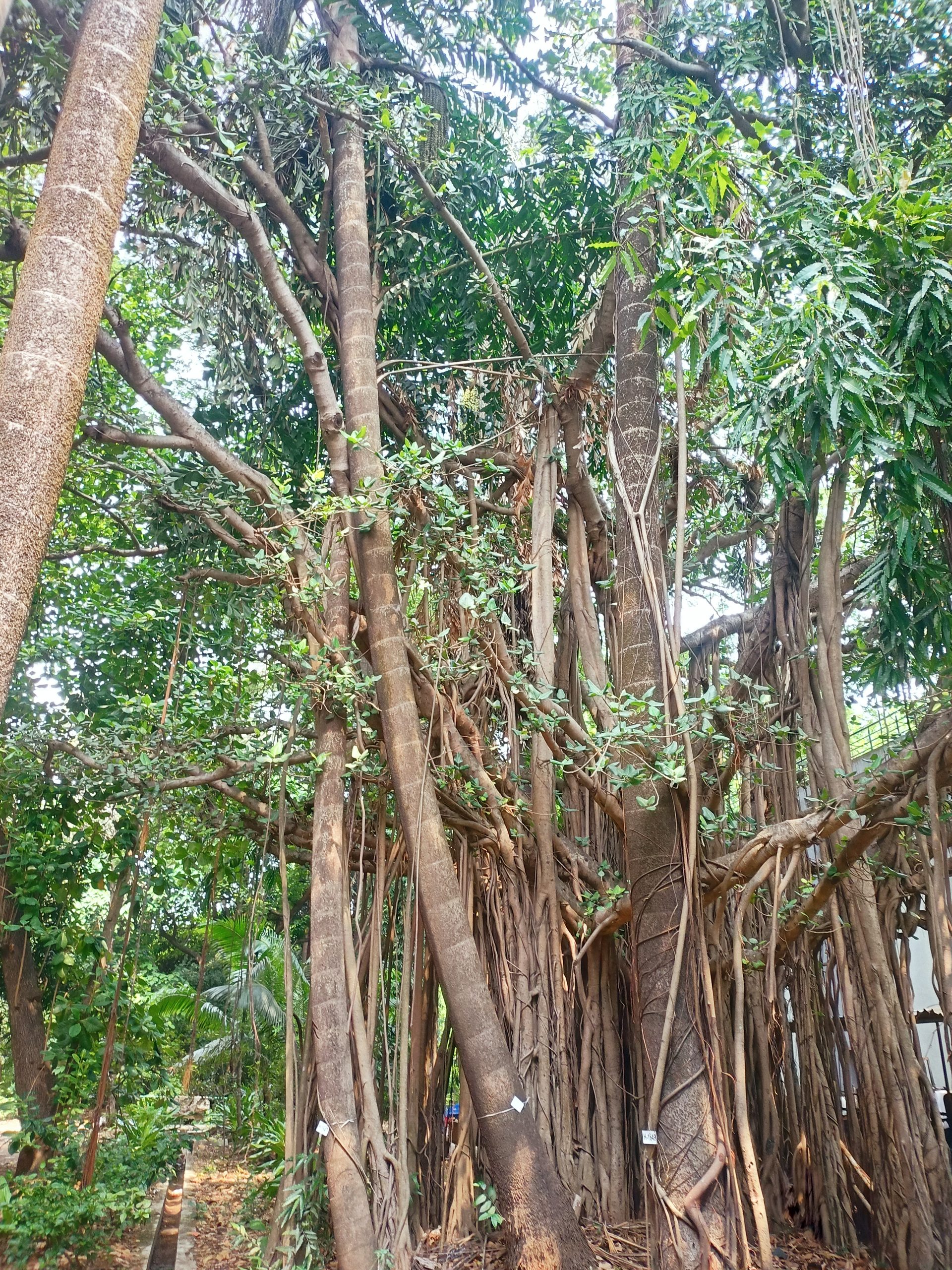
The Gita's Chapter 15: Purushottama Yoga and the Cosmic Banyan Tree
Chapter 15 opens with an upside-down tree, roots in the air and branches reaching down into the world, and asks the reader to do something unusual with it: cut it down.
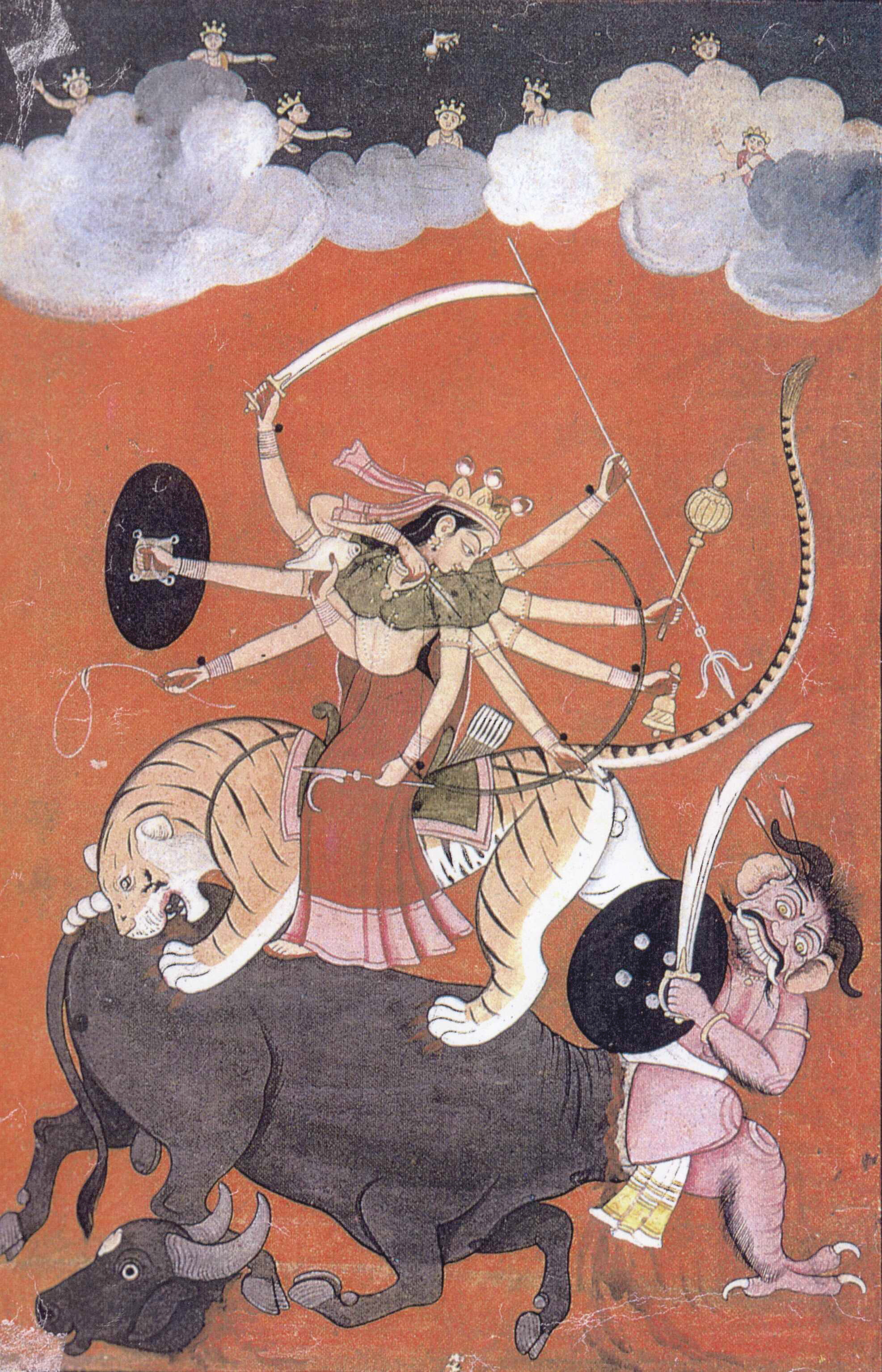
The Gita's Chapter 16: The Divine and the Demoniac Natures
Chapter 16 lists more than two dozen qualities that define two opposite kinds of people — and then makes a claim that's easy to miss: everyone is born with one nature or the other already leaning in a particular direction.