
The Bhagavad Gita: Its Place in the Mahabharata and What It Actually Says
The Gita isn't a standalone scripture — it's 700 verses embedded inside a much longer war epic, spoken on a battlefield between two armies. Here's exactly where it sits in the Mahabharata, and an honest map of what each of its 18 chapters actually covers.

[!ACADEMIC & EXAM REFERENCE]
- Occurs Within: Mahabharata (The 6th book — Bhishma Parva, Chapters 23 to 40)
- Format & Structure: 700 verses across 18 chapters
- Author / Compiler: Maharshi Veda Vyasa (dialogue between Lord Krishna and Arjuna)
- Speaker Breakdown: Lord Krishna (574 verses), Arjuna (84 verses), Sanjaya (41 verses), King Dhritarashtra (1 verse)
- Setting: Kurukshetra battlefield (Dharmakshetra), immediately before the 18-day war
Most people encounter the Bhagavad Gita as a standalone book — a slim paperback with a title and a translator's name on the cover, read on its own, quoted on its own. That's a reasonable way to actually read it, but it obscures something worth knowing: the Gita was never composed as an independent text. It's 700 verses embedded inside a vastly longer work, the Mahabharata, spoken at one specific, dramatically loaded moment in a much bigger story — and knowing exactly where it sits, and why, changes how several of its most famous lines actually land.
Where It Actually Sits: Book Six, and the First Ten Days of an Eighteen-Day War
The Mahabharata is organized into eighteen major books, called parvas. The Gita appears inside the sixth of these, the Bhishma Parva — named for Bhishma, the elder statesman and grandfather-figure to both warring sides, who commands the Kaurava army for the first ten days of the war this book covers. The Bhishma Parva itself runs to four sub-books and 124 chapters in total, and the Gita occupies a specific, relatively compact stretch of eighteen of those chapters near its beginning — meaning the famous scripture most people know as a complete book in its own right is, in its original textual home, a comparatively short episode inside a single book of an eighteen-book epic that is, in total, one of the longest single literary works to survive from the ancient world.
That scale matters for understanding the Gita correctly. It isn't a freestanding philosophical treatise that happens to have some narrative framing bolted on. It's a conversation that happens during a specific, high-stakes moment in an ongoing story whose audience — whoever first heard or read the Mahabharata as a whole — already knew the political and personal history behind it in full. Reading the Gita cold, without that surrounding context, is a little like walking into the climactic scene of a long film partway through and treating its dialogue as a complete, self-contained work — genuinely rewarding on its own terms, but missing the weight the earlier parts of the story were building toward.
The Specific Setup: Why Arjuna Is the One Who Breaks Down
The context the Gita assumes is this: the Kauravas and the Pandavas are two branches of the same royal family, locked in a dispute over succession to the same throne that has escalated, after failed attempts at a peaceful settlement, into open war at the field of Kurukshetra. Arjuna, one of the five Pandava brothers and a renowned warrior, is not facing strangers across the battlefield. Arrayed against him are his own cousins, his teacher Drona (who trained him in archery), and Bhishma himself — the same grandfather-figure commanding the opposing army, a man Arjuna has revered his entire life. This is the specific detail that makes Arjuna's crisis land the way it does: he isn't afraid of losing, and he isn't a pacifist objecting to war in the abstract. He is being asked to kill people he loves and reveres, in a war he has legitimate cause to fight, and the Gita opens with him laying down his bow, telling Krishna — who has taken the specific, deliberately non-combatant role of Arjuna's charioteer, having earlier promised not to personally fight in the war himself — that he cannot see the point in the coming victory if it comes at this cost.
There's a further, deliberately staged structural device that's easy to miss on a first read: the entire text of the Gita is being narrated secondhand. The sage Vyasa (traditionally credited as the Mahabharata's author) grants a warrior named Sanjaya the power of clairvoyant sight so that he can witness the battlefield remotely and report events to the blind king Dhritarashtra, father of the Kauravas, who is not present at the war himself. The Gita's opening line is Dhritarashtra asking Sanjaya what happened when the two armies met — meaning the entire dialogue between Krishna and Arjuna that follows is framed, from its very first verse, as a report being relayed to a third party, not a direct transcript. It's a genuinely sophisticated narrative frame for a text this old, and it's worth knowing it's there even though most translations and summaries skip straight past it to Arjuna's crisis itself.

When It Was Actually Composed — A Separate Question From When the War Supposedly Happened
It's worth being honest about a genuine scholarly complication here: the Gita's own composition date is a separate, actively debated question from the Mahabharata's traditional narrative setting, and even from the rest of the epic's composition history. The broad range most scholars work within places the Gita's composition somewhere between the fifth and second centuries BCE — considerably later than the Vedic material this series has already covered, and later than a casual reader would probably assume for a text this central to Hindu philosophy.
Within that range, there's a genuine split in scholarly opinion over something more specific: whether the Gita was part of the Mahabharata's text from close to the beginning of the epic's own composition, or whether it was a later addition inserted into an already-existing narrative. Scholars favoring later insertion point to real textual evidence — differences in poetic style between the Gita and its surrounding chapters, and apparent influence from Patanjali's Yoga Sutras and other philosophical material that would place it somewhat later, around the second century BCE specifically, in at least one detailed scholarly argument (Robert N. Minor's, among others). This isn't a fringe or marginal position — it's a real, live disagreement among specialists, and it's worth knowing it exists rather than assuming the Gita necessarily entered the epic at the same moment as everything around it.
An Honest Chapter-by-Chapter Map
The Gita's eighteen chapters each carry their own traditional Sanskrit title, most ending in "yoga" — used here in its broader sense of "discipline" or "path," not the physical postures the word usually calls to mind in English today. It's worth noting upfront that different commentators and traditions across the centuries have named a handful of these chapters slightly differently; the titles below reflect the most commonly cited versions, not a single uncontested standard.
Chapter 1 — Arjuna Vishada Yoga (The Yoga of Arjuna's Despair). Covers the setup above in full: the two armies arrayed, Arjuna's request to see the battlefield up close, and his breakdown at the sight of his own kinsmen ready to fight. Notably, Krishna says almost nothing in this entire chapter — it's Arjuna's crisis, stated in full, before any response begins.
Chapter 2 — Sankhya Yoga. Krishna's response begins here, and it's dense enough that later tradition treats this chapter as something close to a summary of the entire text's philosophy in miniature. It introduces the argument that the true self (atman) is eternal and cannot actually be killed by any physical weapon, alongside an early statement of what becomes the Gita's central ethical claim: act according to duty, without personal attachment to the outcome of the action.
Chapter 3 — Karma Yoga. Develops the case for committed, selfless action further, arguing that complete inaction isn't actually possible for an embodied being and isn't spiritually superior to well-motivated action anyway — everyone acts constantly regardless, so the real choice is over the spirit in which action happens, not whether to act at all.
Chapter 4 — Jnana Karma Sanyasa Yoga. Krishna reveals that he has taught this same doctrine across many ages before, in previous incarnations, introducing the Gita's theory of avatara (divine descent) — that the divine takes form in the world specifically whenever dharma, right order, significantly declines.
Chapter 5 — Karma Sanyasa Yoga. Directly addresses a question that's been building since chapter 3: is renouncing action entirely, or performing action without attachment, the better path? Krishna's answer is that both can lead to the same end, but action performed correctly is the more accessible and generally superior route for most people.
Chapter 6 — Dhyana Yoga. Turns to meditation practice directly — posture, seat, the discipline of a wandering mind — making this the chapter most directly concerned with what most people today think of when they hear the word "yoga" specifically.
Chapter 7 — Jnana Vijnana Yoga. Krishna begins describing his own nature more directly, distinguishing his lower nature (the material world) from his higher nature (the living principle animating it), a distinction the following chapters build on considerably.
Chapter 8 — Akshara Brahma Yoga. Addresses death directly, including the passage — verse 10 specifically — describing the practice of fixing the life-force between the eyebrows at the moment of death, a detail this series has already connected to the much later Ajna chakra in the piece on chakras' textual roots.
Chapter 9 — Raja Vidya Raja Guhya Yoga (often translated "the King of Knowledge and King of Secrets"). Krishna describes his role as the sustaining, pervading presence behind the entire cosmos, and introduces bhakti — loving devotion — as a path accessible regardless of a person's social position or background, a genuinely inclusive claim relative to the era's stricter social hierarchies.
Chapter 10 — Vibhuti Yoga. An extended catalog of Krishna's manifestations — he identifies himself with the best or most essential instance of many categories at once (among rivers, among mountains, among weapons, and so on), building toward the claim that everything genuinely excellent or glorious in the world is a partial expression of his own nature.
Chapter 11 — Vishvarupa Darshana Yoga (Vision of the Universal Form). The Gita's most famous single set piece: at Arjuna's request, Krishna grants him a direct vision of his cosmic, universal form — overwhelming, containing all of existence simultaneously — leaving Arjuna terrified rather than comforted, and this chapter gets its own full dedicated treatment elsewhere in this series.
Chapter 12 — Bhakti Yoga. A comparatively short, direct chapter weighing devotion to a personal divine form against meditation on the unmanifest absolute, with Krishna stating that devotion is the more accessible path for most embodied beings.
Chapter 13 — Kshetra Kshetrajna Vibhaga Yoga. Introduces a technical distinction between the "field" (the body and material nature) and the "knower of the field" (the conscious self observing it), laying groundwork for the more systematic metaphysics of the following chapter.
Chapter 14 — Gunatraya Vibhaga Yoga. Describes the three gunas — sattva, rajas, and tamas, translated roughly as clarity/goodness, passion/activity, and inertia/darkness — as the three fundamental qualities of material nature that bind and shape every embodied being's tendencies.
Chapter 15 — Purushottama Yoga. Introduces a striking image — an inverted cosmic tree, roots above, branches below, representing the material world — and argues for Krishna's status as purushottama, the "supreme person" beyond both the perishable material world and the imperishable individual self.
Chapter 16 — Daivasura Sampad Vibhaga Yoga. Directly contrasts what Krishna calls divine and demonic qualities of character — a relatively rare stretch of the text organized around fairly plain, direct ethical description rather than dense metaphysics.
Chapter 17 — Shraddhatraya Vibhaga Yoga. Extends the three-guna framework from chapter 14 to faith itself, arguing that a person's faith, diet, sacrifice, and charitable habits all reflect which of the three gunas dominates their character.
Chapter 18 — Moksha Sanyasa Yoga. The Gita's lengthy closing chapter, synthesizing much of what came before and ending with Krishna's final instruction to Arjuna to abandon all other duties and take refuge in him alone — followed by Arjuna's declaration that his doubt has been dispelled and he will act as instructed, which is the note the entire dialogue actually ends on.
What Happens Immediately After the Gita Ends
It's worth being direct about something many people never learn, because it changes how you might read the text's ending: the Gita concludes with Arjuna's resolve restored, and the very next portion of the Bhishma Parva moves directly into the war resuming, with Arjuna fighting. The Mahabharata doesn't linger on the philosophical afterglow — it returns immediately to the battle the entire conversation was, from a narrative standpoint, delaying. The war continues for eight more days after this point, Bhishma himself eventually falls, and the broader eighteen-day war that follows is genuinely brutal, costing the lives of nearly all major characters on both sides by its end. The Gita is a pause inside that larger tragedy, not a resolution of it — Krishna's teaching addresses Arjuna's crisis of will, not the underlying tragedy of a war between kinsmen, which the text doesn't pretend to make comfortable or costless.
How the Gita Actually Reached the English-Speaking World
The Gita's path into global circulation, and specifically into English, has its own concrete history worth knowing, since it's the reason so many people encounter this specific Sanskrit text in translation rather than any other. The first direct translation of the Gita from Sanskrit into any European language at all was produced by Charles Wilkins, an East India Company employee who had studied Sanskrit in Varanasi under a Brahmin scholar named Kalinatha, and it was published in London in 1785 as The Bhagvat-Geeta, or Dialogues of Kreeshna and Arjoon — printed at the East India Company's own expense, specifically at the urging of Warren Hastings, then the governor-general of British India, who had developed a genuine personal fascination with the text and pushed the Company's directors until they agreed to fund its publication. That 1785 edition is, in a real sense, the single point through which the Gita first entered Western intellectual life at all.
A century later, in 1885, the poet Sir Edwin Arnold produced a considerably more widely read English version, The Song Celestial, rendering the Sanskrit into English blank verse in a style clearly influenced by Tennyson's poetry. This is the specific translation history intersects with one of the twentieth century's most consequential readers: Mohandas Gandhi first encountered the Gita seriously through Arnold's translation, later calling it the best English version he'd read, and decades afterward wrote his own extended commentary on the text, Anasakti Yoga — built around the specific idea of non-attachment to the results of action, drawn directly from chapters 2 and 3's central teaching, and describing his own decades-long attempt to actually live by that principle rather than merely write about it. A single traceable chain — Wilkins's 1785 translation, Arnold's 1885 poetic version, Gandhi's own lived commentary built on it — connects a Sanskrit text embedded in an ancient war epic directly to one of the defining political and ethical movements of the modern era.
Two Oversimplifications Worth Correcting
Knowing the actual setup corrects two claims about the Gita that circulate constantly in loose, secondhand summaries.
The first is the idea that the Gita is essentially a justification for war, or for violence generally. That's not what the text actually argues, and the narrative setup above makes the distinction clear: Krishna's counsel is addressed to Arjuna's specific crisis of will in a war Arjuna already has independent, legitimate cause to fight — a war of succession he didn't start and isn't choosing out of anger — not a general endorsement of violence as a solution to conflict. The philosophical content of chapters 2 and 3 is about the ethics of committed action performed as duty, without personal craving for the reward, and that argument is deployed here in service of a soldier's specific dilemma, but nothing in the text generalizes into "violence is always justified if you can convince yourself it's your duty" — a much cruder claim the Gita's actual argument doesn't make and multiple later commentators, including Gandhi, explicitly read the text as being about inner discipline and non-attachment rather than a license for external violence.
The second is the flattened version of "do your duty no matter what," often repeated as if it were the Gita's entire content compressed into one line. It's not wrong exactly, but it drops the specific qualifier that does most of the actual philosophical work: action performed without attachment to its fruits. The Gita isn't arguing for blind obedience to whatever duty happens to be assigned — it's making a much more specific claim about the psychological and spiritual posture a person should hold while acting, regardless of which action duty calls for in a given moment. Losing that qualifier is exactly how "do your duty" turns into a phrase that can be stretched to justify almost anything, which is precisely the kind of drift this series exists to push back against.
Why the Surrounding Story Actually Matters
None of this context changes what the Gita's philosophical content actually says — the arguments about action, the self, and devotion in chapters 2 through 18 stand on their own regardless of the narrative frame around them, which is exactly why the text has traveled so well outside its original epic setting for centuries. But knowing the actual setup does something worth having: it makes clear that the Gita's teaching was never meant as abstract philosophy delivered in a vacuum. It was composed as a response to a specific, wrenching, personal crisis — a person being asked to act against people he loves, for reasons he can't fully reconcile with what feels right — which is a considerably more relatable starting point than "ancient scripture," even for a reader with no connection to the specific war, family conflict, or historical period the Mahabharata otherwise describes. The three yogas Krishna develops across these eighteen chapters — action, knowledge, and devotion — get their own dedicated, detailed treatment next in this series, now with the actual narrative stakes they were composed to address already in view.
Discover Your Dominant Guna Constitution
Evaluate your balance of Sattva, Rajas, and Tamas according to Chapter 14 of the Bhagavad Gita with our self-inquiry quiz.

Written by Ravindra Valand
Founder and researcher at AnuSutra. Tracing ancient Sanskrit scriptures (Vedas, Upanishads, Bhagavad Gita) directly from canonical Sanskrit manuscripts, exploring the nexus between contemplative spiritual practices and modern cognitive science.
Related Sacred Studies
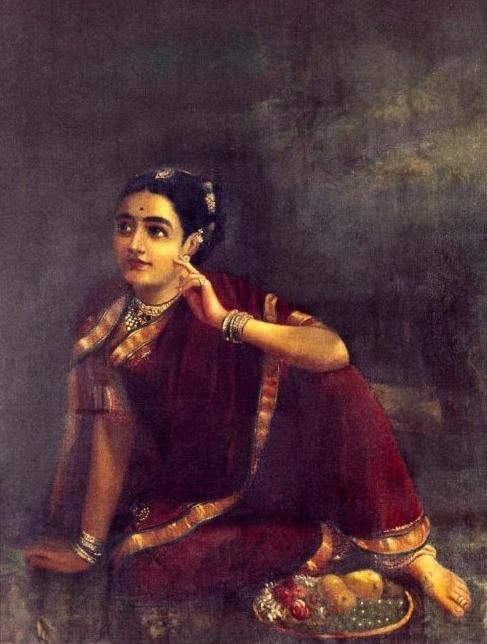
The Gita's Chapter 12: Bhakti Yoga and the Path of Devotion
Arjuna asks Krishna a direct question — is it better to worship a personal god or meditate on the formless absolute? — and the Bhagavad Gita's shortest chapter gives an answer that's more qualified than either side of that debate usually expects.
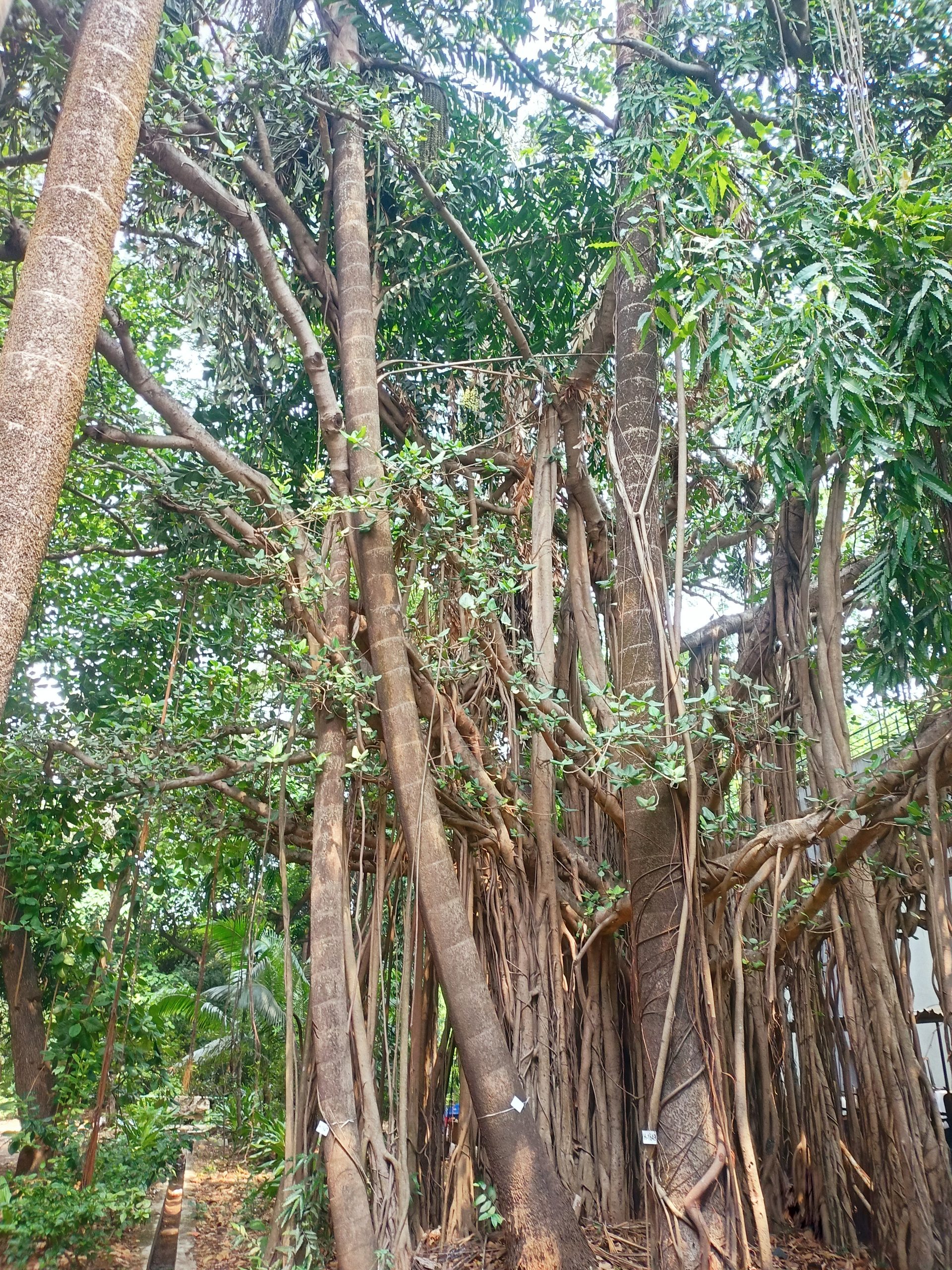
The Gita's Chapter 15: Purushottama Yoga and the Cosmic Banyan Tree
Chapter 15 opens with an upside-down tree, roots in the air and branches reaching down into the world, and asks the reader to do something unusual with it: cut it down.
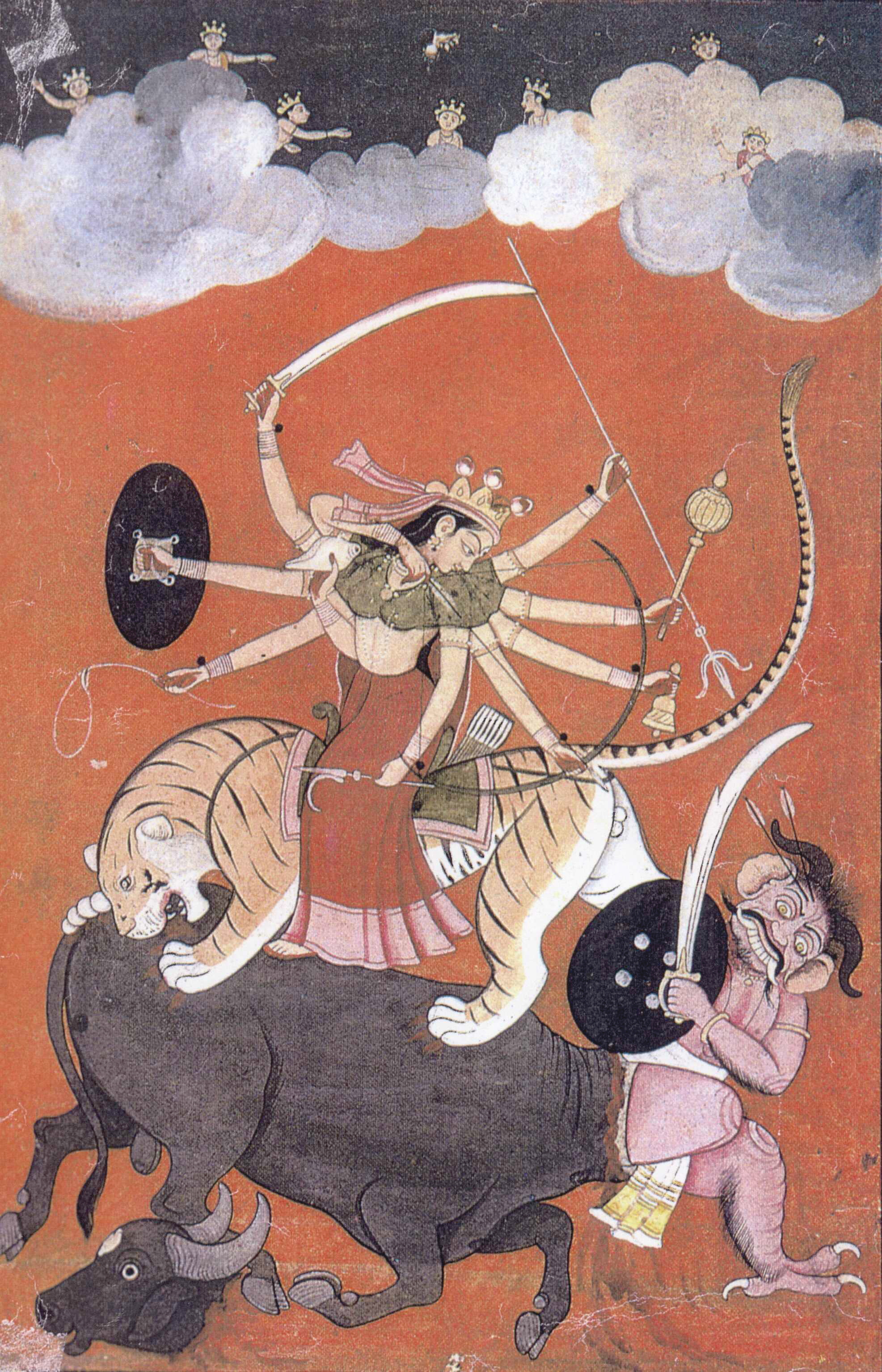
The Gita's Chapter 16: The Divine and the Demoniac Natures
Chapter 16 lists more than two dozen qualities that define two opposite kinds of people — and then makes a claim that's easy to miss: everyone is born with one nature or the other already leaning in a particular direction.