
The 7 Stages of Kundalini Awakening: Authentic Tantric Scriptures vs Modern Myths
Discover the 7 classical developmental stages of Kundalini from the Hatha Yoga Pradipika and Shat-Chakra-Nirupana, dispelling modern misconceptions.
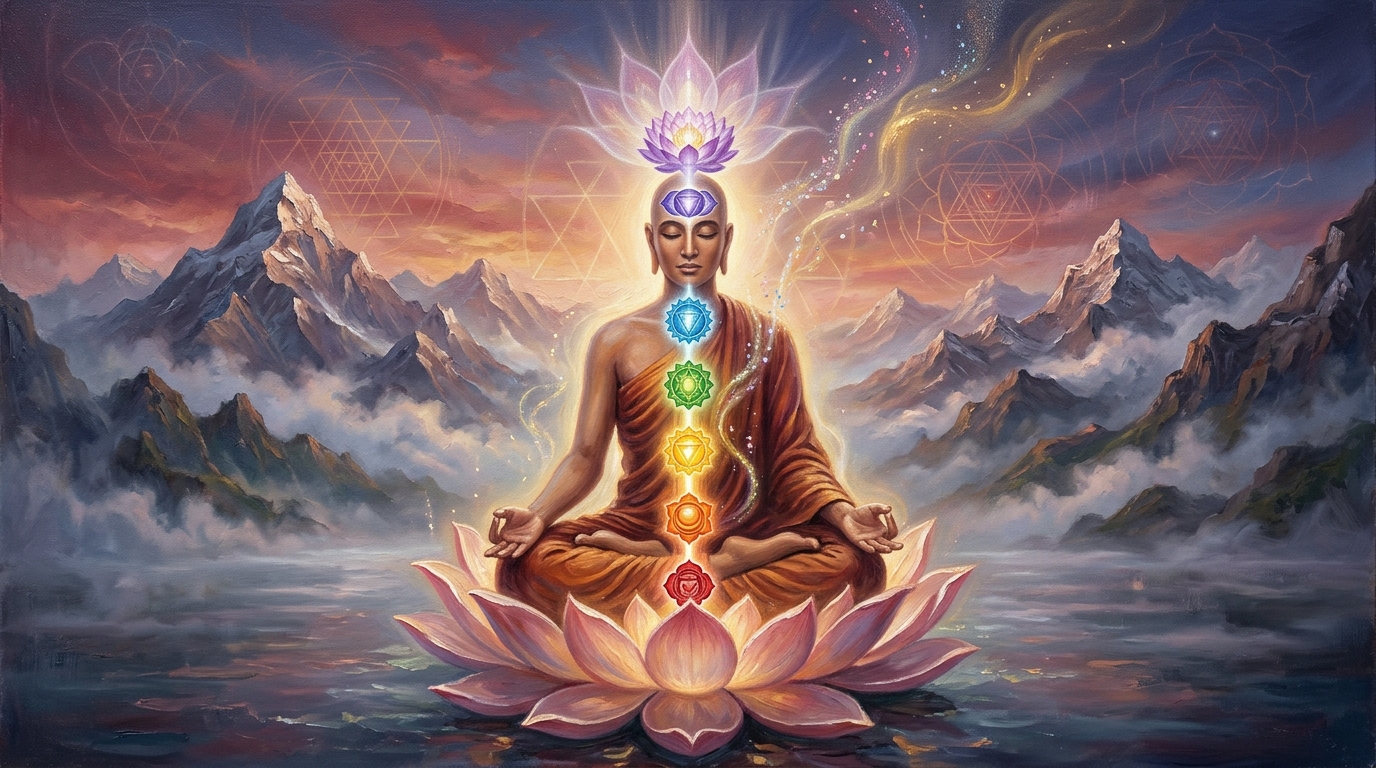
In the contemporary wellness landscape, few Sanskrit terms have suffered more sensational distortion than Kundalini (कुण्डलिनी). A quick glance at modern social media feeds presents Kundalini as an overnight energetic explosion: dramatic bodily convulsions, spontaneous ecstatic trances, vivid visions, or sudden emotional crises that influencers label as an "activation."
To anyone grounded in authentic Tantric and Hatha Yoga lineages, this sensationalized portrayal is not only spiritually superficial—it can be genuinely dangerous.
In classical treatises such as the Hatha Yoga Pradipika of Svatmarama, the Gheranda Samhita, the Shat-Chakra-Nirupana of Purnananda, and the philosophical commentaries of Abhinavagupta in the Tantraloka, Kundalini is never described as a chaotic emotional rollercoaster to be pursued casually for recreational ecstasy. It is revered as the dormant cosmic evolutionary intelligence (Mula-Prakriti or Maha-Shakti) coiled within the human root center (Muladhara).
Furthermore, the awakening of this force is not a singular, dramatic event. It is a systematic, multi-year developmental discipline that unfolds through seven classical stages of psycho-spiritual purification.
Understanding these seven stages through primary Sanskrit texts allows the serious seeker to separate authentic spiritual maturation from physiological nervous system dysregulation, energetic blockages, and psychological projection.
1. What is Kundalini? The Classical Textual Definition
The word Kundalini is derived from the feminine Sanskrit noun Kuṇḍala (कुण्डल), meaning a "coil," "ring," or "annular fold." In the classical anatomy of the subtle energy body (Sukshma Sharira), she is described as resting asleep at the base of the central spinal axis, coiled three and a half times around the self-originated lingam (Svayambhu-Linga), closing the lower entrance to the central energetic channel, the Sushumna Nadi (सुषुम्ना नाडी):
सुप्ता गुरुप्रसादेन यदा जागर्ति कुण्डली।
तदा सर्वाणि पद्मानि भिद्यन्ते ग्रन्थयोऽपि च॥
— Hatha Yoga Pradipika (3.2)(Suptā guru-prasādena yadā jāgarti kuṇḍalī
tadā sarvāṇi padmāni bhidyante granthayo 'pi cha)"When the sleeping Kundalini is awakened through the grace of the master and continuous discipline, all the lotus centers (padmas) and all the knot-like energetic obstructions (granthis) are pierced through."
In ordinary human consciousness, human vitality (Prana) is divided between two peripheral channels:
- Ida Nadi: The lunar, parasympathetic, cooling, reflective, mental channel terminating at the left nostril.
- Pingala Nadi: The solar, sympathetic, heating, active, metabolic channel terminating at the right nostril.
As long as breath and awareness oscillate between Ida and Pingala, human consciousness remains imprisoned within duality—subject to mood swings, restless desires, anxiety, and the cycles of death and rebirth. The awakening of Kundalini is nothing less than the deliberate unification of Ida and Pingala into the central meridian of Sushumna, opening the upward path toward non-dual absorption (Samadhi).
2. Master Matrix: The 7 Classical Stages of Kundalini Awakening
Classical texts describe this transformation through two complementary frameworks: the Four Avasthas (operational states of practice from the Hatha Yoga Pradipika) and the Three Granthis (knots of consciousness pierced along the chakras). Synthesizing these authoritative sources yields seven clearly demarcated stages:
| Stage # | Sanskrit Name | Primary Subtle Center | Dominant Experience & Benchmark | Classical Scriptural Source |
|---|---|---|---|---|
| Stage 1 | Arambha Avastha (Initial Pranic Arousal) | Muladhara to Svadhisthana | Deep pelvic warmth, spontaneous spinal lengthening, involuntary gentle twitching (Kriyas), heightened sensory sensitivity. | Hatha Yoga Pradipika (4.69–71) |
| Stage 2 | Brahma Granthi Bhedana (Piercing the Knot of Physical Attachment) | Manipura (Solar Plexus) | Dissolution of physical insecurity, digestive purification (Jatharagni reset), emotional purging of suppressed fear and anger. | Shat-Chakra-Nirupana (v. 19–21) |
| Stage 3 | Ghata Avastha (Vessel Integration & Sound Resonance) | Anahata (Heart Center) | Spontaneous auditory emergence of the unstruck mystic sound (Anahata Nada—flutes, bells, thunder); deep spontaneous compassion. | Hatha Yoga Pradipika (4.72–74) |
| Stage 4 | Vishnu Granthi Bhedana (Piercing the Knot of Emotional Attachment) | Vishuddha (Throat Center) | Freedom from personal validation; transcendence of karmic relationship bonds; spontaneous linguistic and poetic eloquence. | Yoga Kundalini Upanishad (1.65–68) |
| Stage 5 | Parichaya Avastha (Subtle Discrimination & Vision) | Ajna (Third Eye) | Bilateral cranial Alpha-Theta synchrony, inner brilliant indigo radiance, perceptual transcendence of past and future time. | Hatha Yoga Pradipika (4.75–76) |
| Stage 6 | Rudra Granthi Bhedana (Piercing the Knot of Metaphysical Duality) | Bindu to Sahasrara | Complete collapse of observer-observed duality; the individual ego (Jivatman) dissolves into transcendent consciousness (Paramatman). | Shat-Chakra-Nirupana (v. 37–39) |
| Stage 7 | Nishpatti Avastha / Shiva-Shakti Samyoga (Total Culmination) | Sahasrara (Thousand-Petaled Crown) | Permanent unshakeable peace; the downward return of nectar (Amrita); unbroken embodiment of living freedom (Jivanmukti). | Hatha Yoga Pradipika (4.77–81) |
3. Deep-Dive: The 7 Stages Analyzed in Detail
Stage 1: Arambha Avastha (The Initial Pranic Awakening)
Arambha literally means "the beginning" or "the initiation of effort." In this introductory stage, through disciplined breath control (Pranayama), internal locks (Bandhas—specifically Mula Bandha and Uddiyana Bandha), and ethical grounding, the scattered prana in the lower abdomen begins to gather into a unified force.
The practitioner typically experiences:
- Distinct thermal sensation: a warm, pleasant sensation at the perineum or base of the coccyx.
- Micro-movements: spontaneous micro-twitches (Kriyas) as the ascending energy clears minor neural blockages along the spinal column.
- Emotional volatility: dormant subconscious thoughts (Samskaras) bubble to the surface to be witnessed and released.
(For detailed physical symptoms, readers can consult our clinical-grade overview on Kundalini Awakening Signs & Subtle Indicators).
Stage 2: Brahma Granthi Bhedana (Piercing the Knot of Physical Attachment)
Located between the Muladhara and Manipura chakras, the Brahma Granthi (ब्रह्मग्रन्थि) is the psychological knot that anchors consciousness in biological survival, physical body-identification, and ancestral fear.
When Kundalini ascends into the naval center (Manipura), she stokes the internal fire of digestion and transformation (Samana Vayu and Agni). The seeker is forced to confront their deepest fears of mortality, poverty, and bodily vulnerability. When this knot is breached, fear ceases to be the governing motivator of one's choices. The practitioner develops intense, unshakeable stamina and inner confidence.
Stage 3: Ghata Avastha (The Vessel of Mystic Sound)
Ghata means a "clay vessel" or "pot," signifying that the physical body has now become mature, seasoned, and tempered enough to contain higher vibrational frequencies without cracking.
In this stage, Kundalini enters the Anahata Chakra (Heart Center). Svatmarama writes that in the Ghata stage, the seeker begins to perceive the internal Nada (नाद)—the internal sonic vibration that rings continuously within the acoustic silence of the heart. Traditional texts classify ten distinct stages of this sound, progressing from the roaring of the ocean and the beating of kettledrums to the sweet tinkling of ankle-bells and the clear resonance of a silver flute. The heart center softens permanently; universal compassion (Karuna) replaces egoic sentimentality.
Stage 4: Vishnu Granthi Bhedana (Piercing the Knot of Emotional Attachment)
Located in the region of the throat (Vishuddha Chakra), the Vishnu Granthi (विष्णुग्रन्थि) is the knot that binds consciousness to the desire for personal love, social approval, lineage prestige, and sectarian religious belonging.
Piercing this knot is often reported by practitioners as emotionally demanding, because it requires severing co-dependent emotional attachments. One learns to love without demanding to possess; one communicates truth (Satya) without fear of social censure. The practitioner often experiences a cooling, mint-like sensation at the palate and the throat, and speech becomes magnetically truthful and persuasive (Vak-Siddhi).
Stage 5: Parichaya Avastha (The Stage of Direct Intimacy)
Parichaya signifies "intimate familiarity" or "direct acquaintance." In this fifth stage, Kundalini penetrates the Ajna Chakra (the center between the eyebrows).
The practitioner is no longer merely meditating on reality; consciousness becomes directly intimate with the subtlest layers of space, light, and mind. The five elemental sheaths (Tattvas—Earth, Water, Fire, Air, Space) are thoroughly resolved into their mental causes. The mental chatter of the ordinary monkey-mind (Manas) dissolves completely, replaced by pristine cognitive lucidity (Buddhi). The seeker perceives reality simultaneously from multiple perspectives, free from sensory distortion.
Stage 6: Rudra Granthi Bhedana (Piercing the Knot of Subtle Duality)
The final and most subtle obstruction is the Rudra Granthi (रुद्रग्रन्थि), situated between the Ajna chakra and the crown. This knot is not about physical lust or emotional longing; it is the metaphysical knot of duality itself—the subtle, persistent distinction between "me, the spiritual meditator" and "God, the object of my meditation."
Piercing the Rudra Granthi is the death of the separate self. It is what Kashmir Shaivism calls Vimarsha merging into Prakasha. The sense of being a localized subject residing inside a skull vanishes entirely.
Stage 7: Nishpatti Avastha (The Ultimate Union in Sahasrara)
Nishpatti means "consummation," "perfection," or "the final fruit."
Here, Kundalini (symbolizing individual kinetic energy, Shakti) ascends into the thousand-petaled lotus of the crown (Sahasrara), merging into indivisible identity with transcendent static consciousness (Shiva).
The texts describe this union as releasing a flood of cooling divine nectar (Amrita or Soma), which descends down through the palate, saturating all seventy-two thousand nadis with vibrant, deathless vitality. The practitioner returns to normal worldly activity, but their perception of reality has been permanently revolutionized. They are a Jivanmukta—liberated while still living in the physical body.
4. Modern Myths vs. Classical Tantric Reality
Because classical Sanskrit texts were closely guarded oral traditions, modern commercialization has introduced severe misunderstandings:
Myth 1: "Kundalini awakening happens in a weekend workshop."
Textual Reality: Svatmarama and classical commentaries insist on years of preparatory purification (Nadi Shuddhi, Asana, Shatkarmas, and ethical Yama/Niyama). Attempting to force Kundalini upward through aggressive, forced hyperventilation into an unprepared, toxic nervous system generates what texts call Vata-Kopa (severe nervous system agitation, insomnia, and hallucinations).
Myth 2: "Kundalini awakening is inherently dangerous and ruins your life."
Textual Reality: Kundalini is the mother of the universe (Jagan-Mata). She is naturally intelligent. When aroused gently and systematically through ethical living, balanced diet, and steady meditation, she brings immense health, mental clarity, and profound peace. Danger arises only when seekers use drugs, reckless breath-holding, or forced visualization to bypass psychological maturity.
Myth 3: "Awakening is purely an energetic high."
Textual Reality: Energy (Shakti) without ethical wisdom and self-inquiry (Jnana) is merely an energetic distraction. The sole criterion of authentic Kundalini maturation is not how many colors you see or how much heat you feel in your spine; it is how free you are from anger, greed, vanity, and fear in daily life.
5. Frequently Asked Questions (FAQ)
What is "Kundalini heat" and why does it occur?
During Stage 1 and Stage 2, as pranic currents begin scouring dormant metabolic channels and burning through accumulated psychological blockages (Samskaras), practitioners often report intense internal thermogenesis along the spine or in the solar plexus. In classical Hatha Yoga, this is the activation of Jatharagni and Kundalini-Agni consuming energetic impurities. It typically subsides into a cool, luminous sensation as the energy passes into the Anahata and Vishuddha centers.
What should a practitioner do if energetic sensations feel overwhelming?
Immediately cease intense breathwork (Bhastrika, Kapalabhati) and forced root locks. Ground the physical physiology through wholesome nourishing food (ghee, milk, root vegetables), walk barefoot on the earth, engage in gentle physical walking, and prioritize calm, equal-ratio diaphragmatic breathing (Sama Vritti).
What is the difference between Chakra activation and Kundalini awakening?
Individual chakras can become active, vibrant, or temporarily stimulated through sound, emotion, yoga, or life experiences without Kundalini ascending permanently through them. Kundalini awakening refers specifically to the systemic, irreversible ascent of the root evolutionary potential entering and stabilizing within the central Sushumna corridor.
Conclusion: The Path of Patient Reverence
The ascent of Kundalini is not a trophy to be conquered by an ambitious ego; it is a sacred homecoming. When approached with patience, humility, and grounded scriptural understanding, the seven stages unfold with the natural inevitability of a flower blooming in spring.
Explore scholarly Upanishadic commentaries, subtle body diagnostics, and authentic Sanskrit scripture studies on AnuSutra.
Assess Your Subtle Energy & Chakra Alignment
Take our 10-question diagnostic based on classical Shat-Chakra-Nirupana texts to assess active vs blocked pranic energy centers.

Written by Ravindra Valand
Founder and researcher at AnuSutra. Tracing ancient Sanskrit scriptures (Vedas, Upanishads, Bhagavad Gita) directly from canonical Sanskrit manuscripts, exploring the nexus between contemplative spiritual practices and modern cognitive science.
Related Sacred Studies

Energy Healing Explained: What It Is and How It Actually Works
Energy healing covers a wide range of practices — Reiki, therapeutic touch, biofield therapies — that share a common premise but very different levels of research support. Here's an honest look at what each actually involves.

Sound Healing 101: What the Research and the Ritual Both Say
Singing bowls, gongs, and sound baths have a genuinely ancient ritual history and a modern research record that's more modest than the marketing around them suggests. Here's what's actually documented and what to expect.
सप्तचक्र (Seven Chakras): Complete Ancient Guide to Energy Centers
An exhaustive guide to the सप्तचक्र (Seven Chakras) — Muladhara, Svadhisthana, Manipura, Anahata, Vishuddha, Ajna, and Sahasrara — with Sanskrit Bija mantras, locations, and classical scriptural roots.