
The Svetasvatara Upanishad: One God Behind Many Names
Most classical Upanishads describe an impersonal absolute. The Svetasvatara does something different — it names a personal god, identifies him with Rudra, and states outright that he is one, hidden inside every single being.
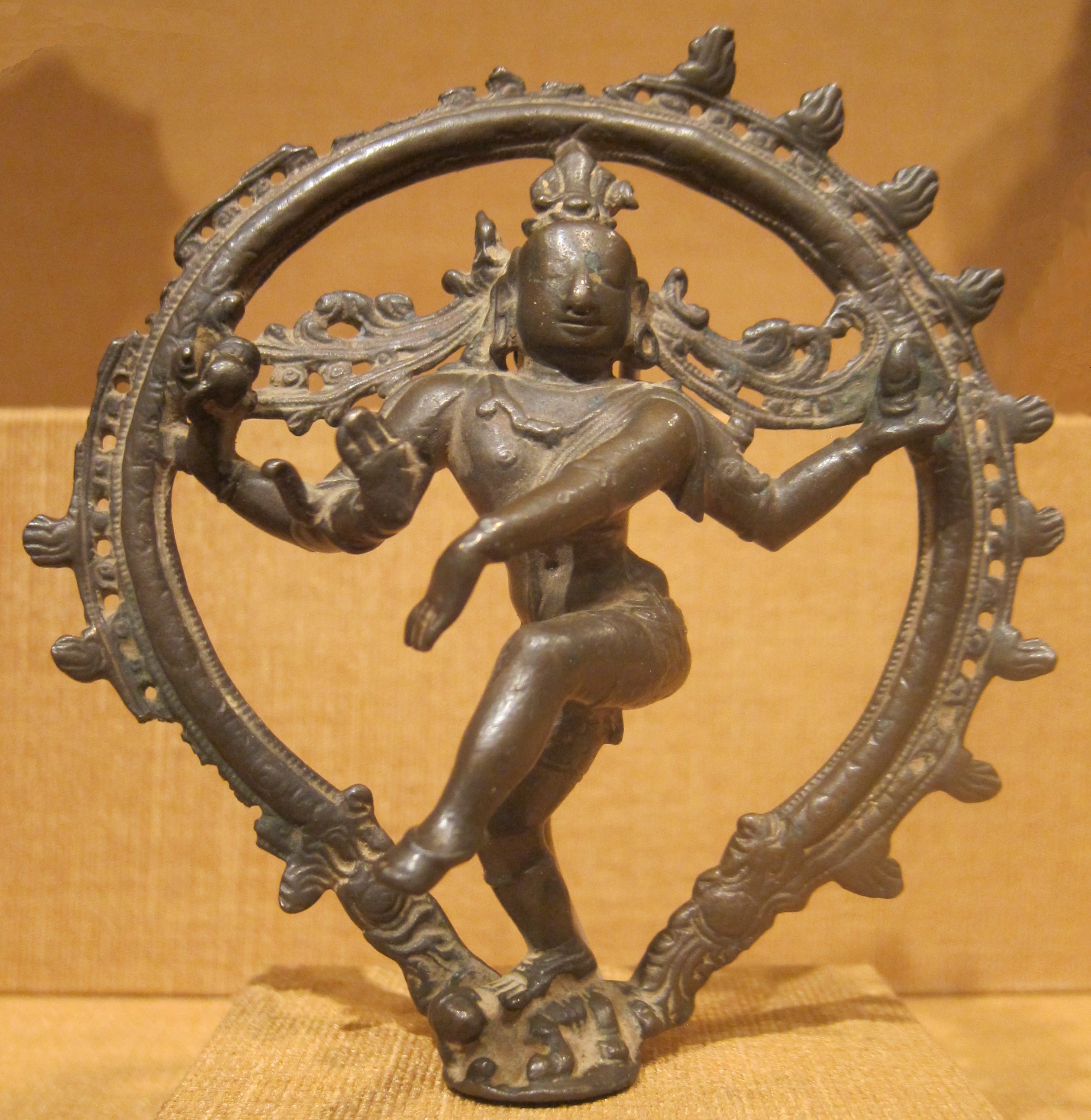
Read through the classical Upanishads in sequence — the Isha, the Kena, the Katha, the Mundaka — and a fairly consistent picture emerges of an impersonal absolute: Brahman, described through negation and paradox, rarely given a name a worshipper could actually address in prayer. The Svetasvatara Upanishad, attached to the Yajurveda and generally regarded as somewhat later than the oldest prose Upanishads, breaks from that pattern in a way that makes it one of the more historically significant texts in the entire corpus. It names a personal god. It identifies him, specifically, with Rudra. And it states, in some of the plainest theistic language anywhere in the Upanishads, that this god is one — a single reality hidden inside every being that exists.
"Hidden in All Beings"
The Svetasvatara's defining line comes at verse 6.11: eko devah sarvabhutesu gudah — one god, hidden in all beings. The verse continues by describing this god as all-pervading, the inner self of all beings, the overseer of action, dwelling within all beings, the witness, the one who grants awareness, existing alone, free of qualities. This is a considerably more personal and more monotheistic-sounding formulation than most of what appears elsewhere in the Upanishadic corpus, where the emphasis tends to fall on an impersonal Brahman that "is" reality rather than a god who watches over it, grants awareness to it, and exists as a distinct overseeing presence within it.
The text goes further, at verse 4.3, in a passage that reads almost like an early and unusually direct statement of monotheistic doctrine: it declares that this one god is, in truth, everything — fire, the sun, air, the moon, the pure principle, Brahman itself, the waters, and Prajapati the lord of creatures. Rather than treating these as separate deities or separate principles each doing their own work, the verse collapses them all into different names and functions of one underlying reality.
Why Rudra Specifically
The Svetasvatara's identification of this one god with Rudra is significant because Rudra, in the earlier Vedic hymns, is a more ambivalent and less centrally worshipped figure than he becomes here — a fierce, somewhat feared deity associated with storms and destruction, invoked as often to be placated and kept at a distance as to be sought out directly. By the time of the Svetasvatara, Rudra has clearly begun the theological transformation that would eventually make him effectively continuous with the figure later texts and traditions call Shiva — not merely a storm god among many, but the singular reality underlying the entire cosmos, described across the text's sixth chapter as the one who creates Brahma at the very beginning and delivers the Vedas to him, the one present at the origin, middle, and end of all things.
This matters historically because the Svetasvatara is one of the earliest texts to make this specific theological move explicit and sustained across an entire work, rather than in scattered or ambiguous references. It represents a documented stage in the development of what later becomes Shaiva theology — devotion centered on Shiva as the supreme, singular reality — while still operating fully within the Upanishadic genre and its characteristic concerns: liberation, the nature of the self, and the relationship between the individual soul and the ultimate reality it's part of.
The Chariot Image and the Three-Part Self
The Svetasvatara doesn't abandon the more analytical, philosophical style of the earlier Upanishads even as it introduces its theistic content. Its first chapter opens with a set of pointed philosophical questions in the same tradition as the Katha and Kena Upanishads — inquiring into what is the cause, what is Brahman, from where beings are born, by what they live, and on what they finally rest — and its second chapter contains detailed instructions on meditation and breath control that read as genuinely practical yogic technique rather than purely abstract theology, making the Svetasvatara one of the texts later traditions point to as evidence that structured yogic practice has roots reaching back into the classical Upanishadic period itself, not only into later, more specialized Yoga Upanishads.
The text also develops an image, echoed later in other Upanishads including the Mundaka and going back further still to the Rigveda, of the individual self and a supreme, unmoved witness sharing one existence — described in the Svetasvatara's own version through the language of the "field" (kshetra) and its "knower" (kshetrajna), a distinction that reappears, expanded considerably, in the Bhagavad Gita's thirteenth chapter.
A Bridge Text, Historically Speaking
Scholars examining the development of Hindu theology have generally treated the Svetasvatara as an important transitional document — evidence that the more personal, devotional strand of worship that becomes dominant in later Hindu religious life (bhakti directed at a specific, named, describable god) has roots reaching back into the Upanishadic period rather than emerging entirely from outside it or after it. The text manages this without abandoning the core Upanishadic commitments to liberation through knowledge of the self and the ultimate unity of that self with the absolute reality underlying everything — it simply insists, more directly than most of its predecessors, that this absolute reality also has a name, is one, and can be approached as a personal presence hidden inside every being rather than only grasped as an impersonal principle behind them.
Discover Your Dominant Guna Constitution
Evaluate your balance of Sattva, Rajas, and Tamas according to Chapter 14 of the Bhagavad Gita with our self-inquiry quiz.

Written by Ravindra Valand
Founder and researcher at AnuSutra. Tracing ancient Sanskrit scriptures (Vedas, Upanishads, Bhagavad Gita) directly from canonical Sanskrit manuscripts, exploring the nexus between contemplative spiritual practices and modern cognitive science.
Related Sacred Studies
The Four Mahavakyas: The Upanishads' Great Sayings, Explained Together
Four short sentences, one drawn from each of the four Vedas, are traditionally treated as the compressed summary of everything the Upanishads are trying to say. Read separately they sound like four different claims. Read together, they're one.
The Isha Upanishad: Renunciation and Enjoyment in a Few Verses
One of the shortest Upanishads ever written spends barely twenty verses solving a problem most traditions never fully resolve: whether the spiritual life requires giving up the world, or engaging fully with it.
The Katha Upanishad: Nachiketa's Dialogue with Death
A boy sent to the house of Death by his own father refuses every bribe Death offers him — kingdoms, long life, every pleasure the senses can hold — until Death finally answers the one question that matters. That refusal is the entire Katha Upanishad.